

booking google ads: as soon as an Internet user types in the name of your establishment, Booking positions itself above your official site, pays less for the click thanks to its strike force, and captures part of the sale in commission. This seemingly simple mechanism is extremely effective because it combines bidding on brand queries, hotel metasearch engines and excellent advertising execution. Here's how this platform leverages your reputation on Google to generate bookings, and above all how you can regain control of your brand traffic without losing your margin.
What Booking does about your brand query
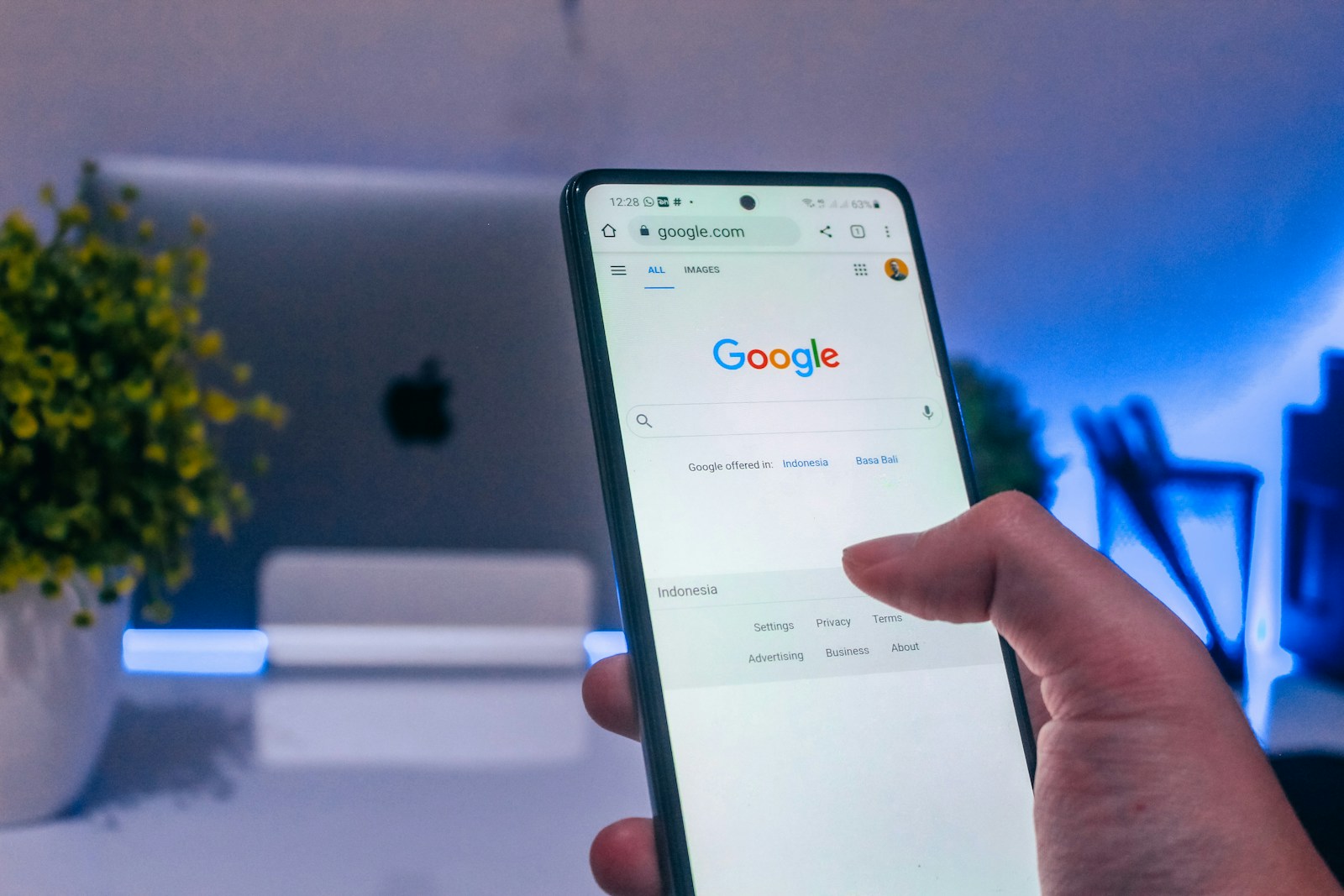
When a search includes the name of your hotel, Booking often appears with a rich advert, price extensions, reviews and reassurance elements. The aim is twofold. On the one hand, to turn away at the last minute an Internet user who is already convinced by your brand. Secondly, to maximise the conversion rate with a highly optimised results page that highlights availability, photos, cancellation policy and, above all, an aggressive price message.
Technically, the platform exploits the full range of sponsored formats. The responsive ads, combined with the teaser and link extensions, create a massive block that pushes your organic results further down. The message variations constantly test what triggers the click: offers of the day, free cancellation, last price, secure booking. From there, Booking links to a page listing your establishment among others, to capture value even if the web user ends up booking a competitor in the same area.
The distinctive feature is systematisation. Budgets are centralised, bids are automated by learning, and tests are relentless. On a global scale, even a micro-improvement in click-through or conversion rates is worth millions. Hoteliers, on the other hand, face this steamroller with limited resources and sometimes less persuasive sites. The execution differential creates a gap that widens with each paid impression.
The central role of metasearch engines and Google Hotel Ads
Visibility is no longer just a matter of text ads. The price comparison and distribution modules placed in your establishment's Knowledge Panel, in Google Maps and in the Local Pack move the routes. Booking uses them extensively because the cost/booking ratio is often exceptional, especially for strong brands.
To understand the levers involved, we need to take a quick look at them. The reference format on the engine side is detailed in Google Hotel Ads: the complete guide. Feeding rates and availability, bidding strategies, locations: everything works together to put your channels in competition on your own behalf. If your direct connection is ineligible, if your price parity is off, or if your bidding is timid, you will automatically leave room for the OTA.
All options and maximum market coverage
Booking, like other distributors, is taking advantage of expanded display options to extend its coverage. SiteMinder's article on the subject sheds light on this dynamic and its impact on the visibility of establishments. See Google Hotel Ads: what can Google's All Options feature do for your hotel?. When everything is activated, the user is offered more channels and more price combinations, which mechanically favours players who are able to bid continuously, display demand-sensitive prices and cover all segments (mobile, long stays, members, etc.).

Hotel Web Design is a Google partner with Google Hotels :
your availability and rates are continuously sent to Google, which displays free booking links
to your booking page.
These links can represent around 10% to 15% additional commission-free bookings.
Read the article on
Google's free booking links
.
It's important to be aware of the shift that's taking place. Your brand query no longer belongs to you in the consumer's mind. It becomes a neutral entry point to a marketplace where the best - or most visible - offer wins out. Booking feels at home here, because this is precisely its model.
Why does this strategy work so well for Booking?
Firstly, because brand requests are the most profitable area for hotel marketing. The intention is strong and the probability of purchase very high. By capturing this traffic, Booking is drastically reducing its average acquisition cost while increasing its market share of customers who could have booked directly.
Secondly, because the platform acts on a massive scale. It pools data, budgets, creative talent and test-and-learn on millions of queries. Its conversion engine is optimised to the point of obsession: sorting of results by expected value, urgent messages (number of rooms remaining), differentiation by segment (mobile offer, Genius), cross-device retargeting. Every micro-friction is tracked down, every micro-gain capitalised on.
Finally, because hoteliers are leaving a window open. Slow sites, heterogeneous UX, less clear price content, perfectible mobile navigation, uninspiring booking engines, lack of visible direct benefits. If the direct experience is not immediately superior, the user will switch to the most reassuring and fastest channel: the one that occupies the top of the page and promises simplicity.
The impact on your margin and acquisition costs
Booking adds its commission to the media costs of a sale captured via a paid ad. From an economic point of view, you pay twice for the same brand conversion. Even if the platform buys the click, it is still your operating budget that bears the commission.
The real question is not how much does the commission cost? but what is the real incrementality? In other words, how much of the bookings generated by the OTA on your name would have gone straight back to you if the ad had not been there? With established brands, cannibalisation is often high. And the more competitive your zone, the more the adsorption of brand journeys by metasearch engines accentuates this drift.
The additional risk lies in learning the algorithms. If you let the OTA win your brand bids for months, the Smart Bidding models accept this as a normal outcome. You then have to pay more - or offer more value - to reverse the trend. Hence the importance of a continuous presence, even on a low budget, on your branded queries, coupled with a high-performance official site.
Regaining control: practical tactics
The first pillar is a properly structured brand campaign. Make a clear distinction between pure brand, brand + destination, and common spelling mistakes. Create dedicated mobile ads. Multiply the message variants, but keep a clear, tangible promise right from the first headline: best rate guaranteed + exclusive benefit (upgrade subject to availability, welcome drink, free parking, etc.). Work on price, tagline and link extensions to fill the space.
The second pillar is the quality of the landing page. It should load in less than two seconds, display the value comparison in the blink of an eye, and place the booking engine above the waterline. Aesthetics and structure really help conversion. To structure the blocks, columns and visual hierarchy, you can take inspiration from The basics of site design using grids, sections and columns.
The third pillar is a seamless mobile experience. Touch, legibility, one-handed navigation, immediate availability and direct benefits are all crucial. Photos need to be compressed without losing quality, the calendar needs to be fluid, and the basket summary needs to be clear. Designing this ergonomics implies starting from measurements and concrete uses. On this point, Taking the right steps to design a hotel site will give you a pragmatic method.
The fourth pillar is live content. Travellers gain confidence when they perceive genuine editorial activity: local news, behind-the-scenes information about the establishment, service updates, events. A well-maintained news module reassures users and boosts SEO. If you need to structure this type of section, see The basics of news website design.
The fifth pillar is social proof. Include recent, verified reviews on the landing page, specify the ratings by segment (couples, families, business) and add contextualised micro-notices next to the key services (breakfast, spa, Wi-Fi). This anchoring of trust, if it is more visible with you than with Booking, reverses the perceived advantage.
Hotel Web Design is a Google partner with Google Hotels :
your availability and rates are continuously sent to Google, which displays free booking links
to your booking page.
These links can represent around 10% to 15% additional commission-free bookings.
Read the article on
Google's free booking links
.
Optimising your presence on the hotel metasearch engine
If you don't appear in the price comparison module, Booking just has to collect. It is therefore better to feed Hotel Ads directly (via your engine or your partner) with a clean, stable and competitive feed. Work on parity, not to be cheaper than the OTA - an often unrealistic objective - but so that the user sees a clear benefit in booking with you: flexibility, exclusive advantages, credits to spend on the spot.
On the bidding side, start simple: manual CPC strategies on the brand to control the floor, then test percentage of revenue or CPA models when your volume becomes significant. Segment by device and by outbound market; local mobile intent has neither the same cost nor the same conversion rate as a desktop search abroad. For a very operational optimisation framework, see The keys to improving the performance of your Google Hotel Ads campaigns.
Monitor price quality continuously. Discrepancies in tax, charges or mapping errors destroy confidence and cause customers to switch to the OTA. Set up daily alerts on price discrepancies by date and by market. Finally, align your booking engine with a short conversion tunnel, an ultra-visible discount code for members and the highlighting of direct benefits.
Special case: residences and long stays
When it comes to stays of more than seven nights, the battle is fought over price ranges, cancellation conditions and value messages (equipped kitchen, laundry room, work space). Booking excels at displaying these attributes. It's up to you to make them even clearer on your site and in your brand ads. To structure your offer in this segment, you can rely on How to promote a hotel residence effectively.
Set up a page dedicated to long stays with increasing savings blocks and concrete visuals, and feed Hotel Ads with a specific price compartment. Deactivate member discounts that systematically place you below your direct price; replace them with a specific advantage reserved for your club.
AI and automation: the new front line
Brand campaigns and metasearch engines are now optimised by intelligent bidding systems. Booking, with its monumental volumes, is driving these models to its advantage. Hoteliers therefore need to connect their own value signals: margin per room, probability of upsell, cost of service. If your conversions are measured only in terms of gross bookings, the algorithm will favour less profitable sales.
Automation can work for you if you feed it properly. Set up improved conversions on the engine side, import transaction values net of fees, and create loyalty audiences to boost retention. To anticipate the impact of technology on your organisations and businesses, read The impact of AI on the job market and roles in web design. It's not just about tools, it's also about people: what new skills are needed to manage channels that have become algorithmic?
Brand governance: contract and protection
Advertising is not enough. Check your contractual clauses: some explicitly authorise the purchase of your establishment's name by the partner, while others prohibit or restrict it. Document your requests, set up a monitoring system for competing advertisements on your brand, and request arbitration as soon as a threshold is crossed.
On the search engine, register your trademark whenever possible, and report any misuse in the ad texts. Even if bidding on your trademark is not prohibited, the use of the name in the ad may be, depending on the jurisdiction and policy. As far as campaigns are concerned, exclude competing brand terms and carefully clean up dynamic queries so as not to fuel general overbidding.
Measuring incrementality without getting it wrong
Without testing, there is no truth. To estimate the cannibalisation of your brand sales, set up experiments: temporarily cut your ads in a restricted geographical area and compare the OTA's share. Or conversely, increase your bids on certain dates while monitoring direct versus intermediary bookings.
Also compare browsing behaviour. When your brand ads are active, is the rate of engagement on the landing page rising? Are ancillary sales (breakfast, spa) keeping pace? Are cancellations falling? These signals help to measure value beyond the simple reservation. And above all, monitor your overall distribution cost, not just the media ROAS. A profitable brand campaign that shifts direct sales to the OTA is a bad calculation.

Hotel Web Design is a Google partner with Google Hotels :
your availability and rates are continuously sent to Google, which displays free booking links
to your booking page.
These links can represent around 10% to 15% additional commission-free bookings.
Read the article on
Google's free booking links
.
90-day action plan
Days 1 to 15. Express audit. Main brand queries, competing ads, landing page quality, loading time, price parity, presence on the hotel module. Detect visible flaws (no direct benefit, booking engine too low, lack of reassurance elements).
Days 16 to 30. Tidy up. Launch or reforge brand campaign, write three direct benefit variants, activate all extensions, create dedicated landing page. Connect improved conversions with net transaction value. Upgrade the social proof module and clarify the cancellation policy.
Days 31 to 45. Metasearch. Activate or repair the Hotel Ads flow, test a CPC strategy on the brand, create an exclusive price compartment and a visible club code. Clean up price discrepancies and automate a daily alert.
Days 46 to 60. Tests and iterations. A/B testing on the value promise, audience adjustment, segmentation by device and geography, experimentation with a higher bid on short-term booking windows. Measurement of overall distribution cost.
Days 61 to 90. Industrialisation. Page templates for seasonal offers, weekly search term analysis routine, dashboard by channel, written brand governance policy and distributor relations. Define intervention thresholds and contractual escalation scenarios.
Elevating the direct experience above the marketplace
The most underestimated lever remains UX. When your site is more desirable, clearer and faster than the OTA page, the cumulative effect on the conversion rate makes up for the difference in awareness. Design light pages, optimised visuals, a distraction-free tunnel, and exclusive benefits presented right at the top of the page. Showcase the emotional reasons for choosing your establishment: hospitality, character, neighbourhood, events, personalised attention. The marketplace is strong on rationality, but weak on authentic emotion linked to a unique brand.
Think post-booking too. Intelligent pre-stay communications, the ability to manage your booking simply, relevant and transparent upsell options all add up to a superior overall experience that encourages loyalty, which automatically reduces your dependence on the platform.

Conclusion: turning constraints into advantages
Booking does not steal your brand traffic; it methodically exploits the rules of the advertising game and the economics of metasearch engines. As long as your direct offering remains less visible, less clear or less credible, the algorithms will prevail. The good news is that the brand query is precisely where you have the most leverage: message, page, benefits, parity and measurement.
By putting the official experience back at the centre - clear promise, exclusive benefit, fast landing page, solid presence on the hotel module - you reduce cannibalisation, lower your distribution cost and regain ground, click after click. And if you want to speed up this upgrade, you can get fast support via Your quote in 5 minutes. Moving from a defensive to an offensive brand strategy is not a luxury: it's the key to capturing the value that you yourself have created.












Hotel Web Design is a Google partner with the Google Hotelsincluding our customers benefit on a daily basisGoogle search: information about your accommodation, availability and prices is sent continuously to the search engine, which displays free booking links from the Google search directly to your booking page. These free links represent around 15% of additional commission-free bookings for our customers in 2022! Read our article on free booking links from Google
Booking / reservation website
-
Booking services for hotels and holiday rentals
- Turnkey site with administration interface training on delivery
- Adapted logo and graphic charter. Possibility of using your existing elements
- Hospitality SEO
- Integration of reservations module
- or integration of an external booking engine (Reservit, Availpro, Mister booking, Roomcloud, etc)
- Integration of specific HTML elements (review portals, customer reviews, weather, press, pop-ups, direct chat, etc.)
- Secure SSL / HTTPS
- Multilingual
- Website user interface
- Hosting and domain name
- Fast delivery

Hotel Web Design is the web agency 100% dedicated to the hotel industryWe can help you with all aspects of digital communication for your accommodation: booking websites, natural referencing specialising in the hotel industry, Google Ads referencing and Google Hotel Ads, social networking campaigns, graphic charters and logos for hotels.
Make an appointment today for free advice on how to optimise the digital management of your accommodation.