
direct hotel bookings
Error No. 1: your website inspires less trust than Booking
If a customer hesitates between Booking and your website, they are not only comparing prices. Above all, they are comparing a feeling of security. Booking reassures with its ultra-standardised codes: reviews visible everywhere, a familiar payment process, immediate confirmations, cancellation that is often clear, and an interface travellers have already used dozens of times. If your website seems homemade , slow, or simply less clear, the reflex is immediate: back to the OTA.
Trust signals come down to details: visual consistency, mobile readability, understandable error messages, accessible legal information, and above all an impression of control. The customer must feel they are not taking a risk by booking with you. Yet many hotel websites leave grey areas: conditions buried in a PDF, policies that change from page to page, or a vague promise about payment. By contrast, Booking imposes a structure that, even if it constrains you, reassures the traveller.
To understand why dependence on platforms weakens your image in the long term, you can consult The limits of Booking and Airbnb in building a hotel brand.
Error No. 2: a brochure website that doesn’t sell
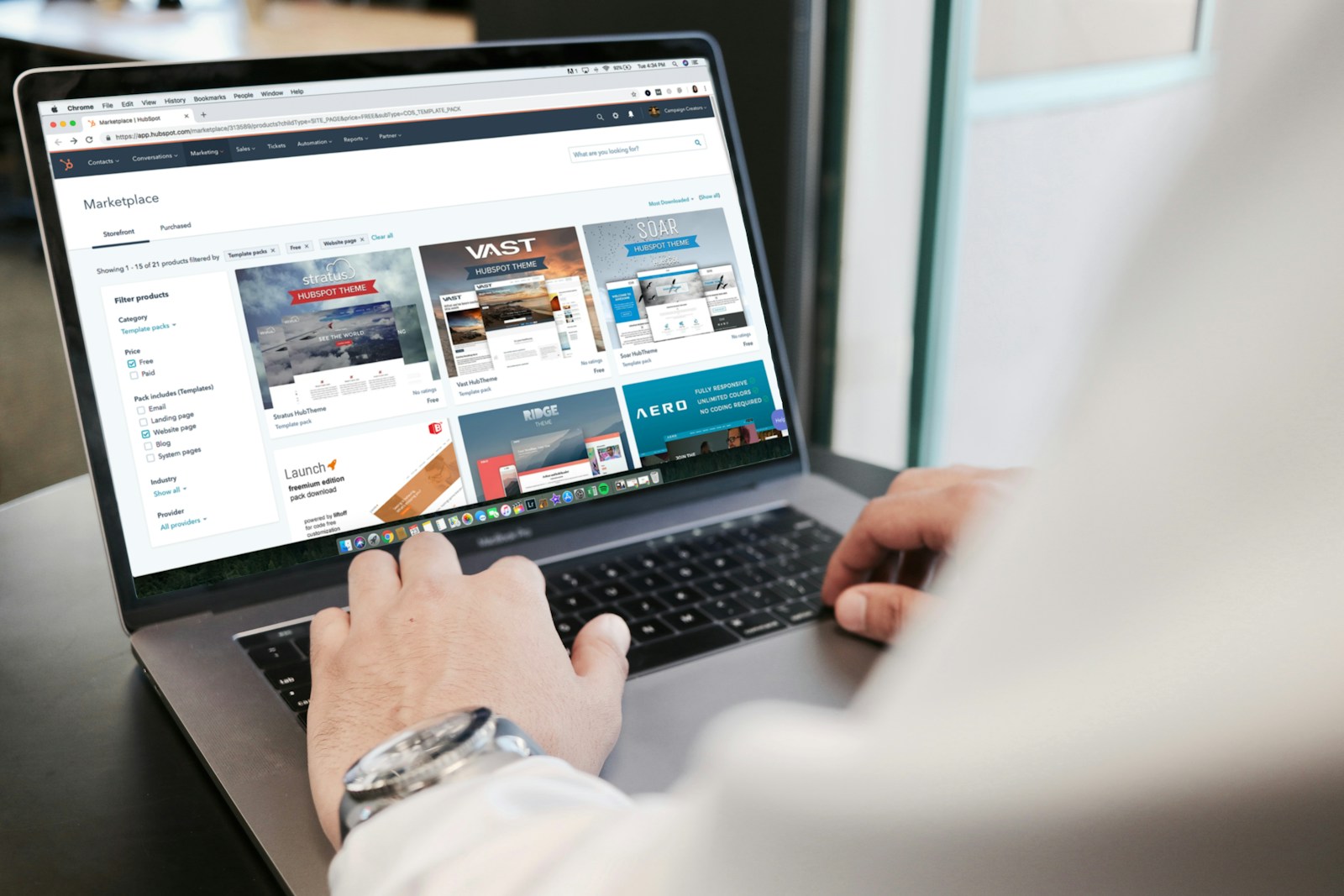
Many establishments have a website that presents : a few photos, a welcome text, a contact form, sometimes even a Book button that redirects to an external solution that isn’t always reassuring. Result: the website informs, but doesn’t convert. And when a customer wants to take action, they look for the simplest path… so Booking.
A website that sells must be built like a journey: answer objections (where to park, opening hours, cot, pets, accessibility), highlight the benefits (experience, location, atmosphere, services), and above all make booking more obvious than abandoning. Failing that, Booking becomes your real conversion engine, and your website a simple brochure.
On this topic, the article Why a brochure website is no longer enough for a hotel or a holiday rental details what is most often missing from websites that are losing sales.
Error No. 3: a booking process that’s too complicated (or too long)
Each extra step makes the conversion rate drop: an unintuitive date selection, pages that reload, hidden promo codes, mandatory account creation, a form that’s too long, intrusive captcha, or a funnel that opens in a new window. Booking has been optimising these frictions for years. Your website cannot afford to add noise to the journey.
The rule is simple: the customer must understand in a few seconds (1) what they are booking, (2) at what price, (3) with what conditions, (4) and how to confirm. As soon as the interface becomes ambiguous, the user starts to doubt: Did it work? Will I be charged twice? Will I receive a confirmation?. And when doubt appears, the comparison with Booking becomes brutal.
If you see drop-offs during the booking process, it’s not always a matter of price: it’s often a matter of clarity and reassurance. On this subject, the analysis of 3 ways to get your customers to complete their bookings provides practical ideas to reduce abandonment at the critical moment.

Hotel Web Design is a Google partner with Google Hotels :
your availabilities and prices are continuously sent to Google, which displays free booking links to your booking page.
These links can represent around 10% to 15% additional commission-free bookings. Read the article on
Google's free booking links
.
Error No. 4: poorly presented (or non-existent) direct prices and benefits
Saying Best price guaranteed isn’t enough if the customer sees neither proof, nor a clear benefit, nor a reason to stay on your website. Many hotels display the same public rate everywhere and are surprised that the customer chooses Booking. Yet even at the same rate, Booking sells a booking experience: simplicity, customer account, centralised cancellations, reviews, and sometimes a loyalty programme. You must compensate with higher perceived value when booking direct.
The key isn’t necessarily to slash prices. The key is to make the direct offer more desirable: breakfast at a preferential rate, an upgrade subject to availability, late check-out, a welcome drink, free parking, more flexible conditions, or priority room choice. But be careful: if these benefits are hidden at the bottom of the page, expressed in jargon, or scattered, they won’t play their role. A direct benefit must be visible from the offer page, reiterated at the payment stage, and confirmed in the email.
Error no. 5: unclear cancellation and payment terms
A customer will tolerate a higher price if the rules are crystal-clear. Conversely, they may avoid a competitive rate if the terms seem like a trap. Many sites use ambiguous wording: pre-authorisation possible, non-refundable under certain conditions, cancellation depending on period, with no timetable or examples. Booking, on the other hand, generally displays standardised labels and a repetitive structure that avoids interpretation.
Your objective: eliminate uncertainty. Display the terms in the right place (at the rate-selection stage, then in the final summary), with simple wording, and a clear reminder of what happens after booking (immediate email, invoice, modification policy). Transparency is not a risk: it’s a conversion argument.
Error no. 6: photos and content that don’t match real expectations
Booking imposes content density: gallery, amenities, an implicit FAQ via reviews, map, categories, and sometimes photos taken to certain standards. On your site, we often see the opposite: a nice hero photo but few useful visuals (bathroom, view, parking, access, breakfast, shared areas), little concrete information, and sometimes overly retouched images. The customer then says: I’ll go and check on Booking. And they book there.

A good strategy is to build a visual library that answers questions before they’re asked: dimensions, real atmosphere, details, and consistency across categories. Add utilitarian photos (access, reception, lift, stairs, exterior at night) and content that reassures (what’s included, what isn’t, and who it’s ideal for).
Some niches (such as experiential accommodation) require even more staging and proof. For inspiration, you can look at Examples of websites for a love room, which illustrates presentation conventions designed to convert.
Error no. 7: a site that’s too slow, especially on mobile
Booking is fast, optimised, and designed mobile-first. If your site takes 4 to 6 seconds to load, if the buttons are small, if the calendar is hard to use with your thumb, you mechanically lose sales. The problem: many hotels assess their site on a computer, whereas most searches and a large share of bookings happen on a smartphone.
The usual causes: images that are too heavy, unnecessary scripts, multiple fonts, auto-playing videos, embedded maps everywhere, or too many plugins. The consequence is always the same: the user goes back, retypes the hotel name on Google, clicks on Booking, and finishes where it’s smooth.
Error no. 8: you let Booking control your brand in the customer’s mind
A point often underestimated: when a customer discovers your property via Booking, they may end up associating your name with the platform rather than with your brand. And if your site doesn’t take back control with a strong identity, a clear message, and a consistent experience, you remain interchangeable. Booking becomes the place people book by default.
The most paradoxical thing is that Booking itself has no interest in you becoming too strong in direct sales, but it can publicly acknowledge the reality of the market without worrying about it. The external article Direct bookings: Booking validates … but isn’t worried … illustrates this dynamic well: the platform can validate the principle of direct sales while retaining a structural advantage in conversion.
Error no. 9: you don’t capture (or capture poorly) hot demand
A customer who types your hotel name into Google is often ready to book. If, at that moment, your site doesn’t highlight an obvious booking path, they go to the sponsored links or to the most visible OTA. Typical mistakes: an inconspicuous Book button, no widget in the header, a different CTA depending on the page, or a redirect to an external engine that doesn’t follow your visual codes.

Hotel Web Design is the 100% web agency dedicated to the hotel industry, supporting you in all aspects of digital communication: booking websites, natural search engine optimisation specialising in the hotel industry, Google Ads and Google Hotel Ads, social networking campaigns, graphic charters and logos.
Make an appointment today for free advice on optimal digital management.
Another point: inconsistency of information. If your opening hours, your address, or your policies differ between your site, Google Business Profile and the platforms, the customer doubts. And doubt, once again, benefits Booking because its interface gives the impression of information verified by volume and reviews.
Error no. 10: you don’t demonstrate the value of booking direct
To win against Booking, you need to go beyond the simple financial argument. The customer must understand that booking direct is simpler for them (flexibility, direct contact, special requests), more pleasant (personalised welcome, perks), and more reliable (direct communication, fewer intermediaries). Yet many establishments settle for a generic message, with no proof or staging.
Show proof: customer testimonials on your site, examples of special requests fulfilled, highlighting a human service (quick reply, WhatsApp, reception), and above all a promise kept. If you claim best price, explain how you apply it. If you claim flexible, show the exact conditions. If you claim perks, list them clearly at every step.
To go further on concrete levers (without necessarily spending more), the article How to increase without increasing your marketing budget offers an approach focused on actions and priorities.
Mistake no. 11: you don’t treat your site as a sales channel
Booking is data-driven: click-through rate, conversion rate, continuous testing, ongoing optimisation. Conversely, many hotel websites are redone every 4 to 7 years, then left as-is. Without measurement (analytics, events, funnel tracking), you don’t know where customers drop off: room page, calendar, options, payment, or confirmation.

Treating the site as a sales channel means tracking simple indicators: conversion by device, speed, abandonment rate by step, performance of offer pages, and effectiveness of reassurance messages. It also means evolving the site: improve the most viewed pages, clarify pricing, strengthen proof, and reduce friction.
Mistake no. 12: you try to do like Booking instead of doing better on your strengths
You won’t win by copying the OTA’s codes. You’ll win by playing what Booking can’t offer as well: direct relationship, brand tone, a unique experience, knowledge of the area, and service. Your site must tell and sell your promise, not simply display rooms.
In concrete terms, this means pages that showcase the stay rather than the accommodation: itinerary ideas, local guide, seasons, events, partnerships, experiences, and content that creates desire. Booking captures the intention I need a bed. Your site must capture the intention I want to experience something here.
How to fix quickly: an actionable checklist
If you need to prioritise, start with what has the greatest impact on conversion:
1) On mobile, is your booking button visible as soon as you land on the page (header or sticky)?
2) Is the calendar usable with the thumb, without zooming, without slow reloads?
3) Are the conditions (cancellation/payment) displayed at the right time, in plain French, without a PDF?
4) Are the benefits of booking on your site visible on the room pages AND at the point of payment?
5) Do your photos answer practical questions, not just aesthetics?
6) Is mobile speed decent (no images of several MB, no unnecessary animations)?
7) Is the booking engine visually consistent with your site, without giving the impression of leaving for another world?
Taking back control: working method and support
Breaking the “everyone books on Booking anyway” reflex requires a structured approach: friction audit, redesign of the booking journey, improvement of content and proof, then continuous optimisation. That is precisely what How a web agency helps a hotel regain control of its sales, , with a results-oriented logic rather than design alone.
Your quote in 5 minutes
If you want to quickly identify the 3 to 5 mistakes that are costing you the most sales today (and fix them without starting from scratch), you can request Your quote in 5 minutes.













Hotel Web Design is a Google partner with the Google Hotelsincluding our customers benefit on a daily basisGoogle search: information about your accommodation, availability and prices is sent continuously to the search engine, which displays free booking links from the Google search directly to your booking page. These free links represent around 15% of additional commission-free bookings for our customers in 2022! Read our article on free booking links from Google
Booking / reservation website
-
Booking services for hotels and holiday rentals
- Turnkey site with administration interface training on delivery
- Adapted logo and graphic charter. Possibility of using your existing elements
- Hospitality SEO
- Integration of reservations module
- or integration of an external booking engine (Reservit, Availpro, Mister booking, Roomcloud, etc)
- Integration of specific HTML elements (review portals, customer reviews, weather, press, pop-ups, direct chat, etc.)
- Secure SSL / HTTPS
- Multilingual
- Website user interface
- Hosting and domain name
- Fast delivery

Hotel Web Design is the web agency 100% dedicated to the hotel industryWe can help you with all aspects of digital communication for your accommodation: booking websites, natural referencing specialising in the hotel industry, Google Ads referencing and Google Hotel Ads, social networking campaigns, graphic charters and logos for hotels.
Make an appointment today for free advice on how to optimise the digital management of your accommodation.