
Thinking experience before decoration: grabbing attention in a matter of seconds
entertainment website - In entertainment, the visitor rarely comes to read. They come to feel, discover, play, listen, laugh, book and share. The design should therefore be guided by a simple question: what main action do you want to trigger in the first 10 seconds? Launch a video, listen to an extract, consult a programme, buy a ticket, join a community, download a demo, subscribe to a newsletter?
A successful site in this area immediately clarifies (1) the type of content, (2) the emotional promise, and (3) the next step. This requires a very explicit header, a controlled visual or animation, and a single call to action above the waterline. Multiplying the number of buttons (Discover, View, Find out more, Shop, Ticketing, Community) dilutes energy. It's better to have a single main path, then secondary paths further down.
Defining a narrative identity: world, tone, rhythm, codes
An entertainment site doesn't just sell an offer: it sells a world. The interface must therefore speak the same language as your content. An independent games studio, a music festival, a comedy medium or a streaming platform do not have the same rhythm, nor the same visual codes. Before even choosing colours, formalise your brand script: tone (ironic, epic, intimate), tempo (energetic, contemplative), references (cinema, arcade, club, pop culture), and target emotions (nostalgia, surprise, thrill, comfort).
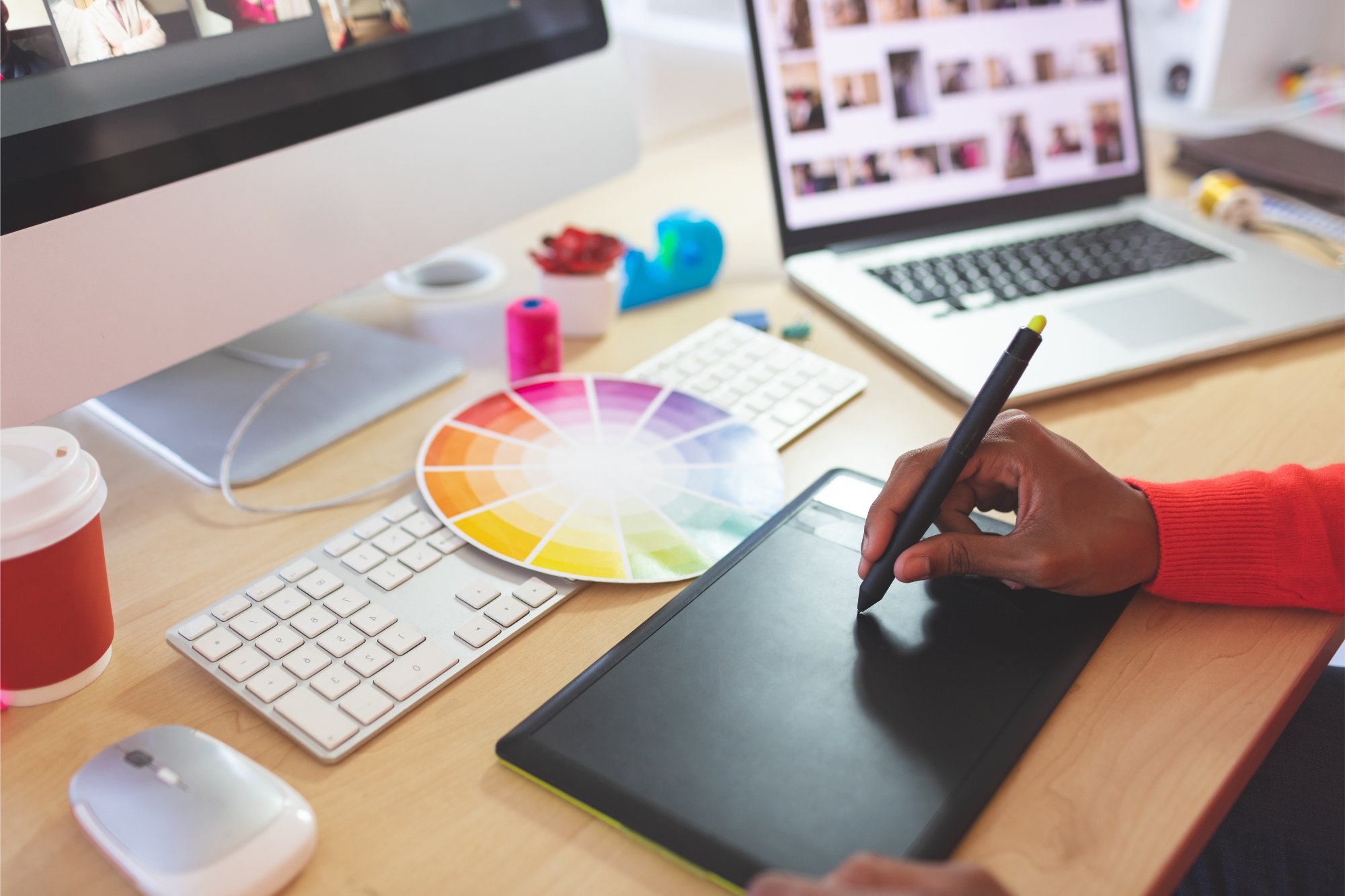
Next, translate this script into design decisions: a tighter or looser grid, more vivid or more discreet micro-interactions, full-page images or thumbnails, bold use of illustration or live action. The aim is for the user to understand your DNA without reading a paragraph.
Visual hierarchy: guiding the eye like a stage director
In entertainment, we show a lot (posters, trailers, extracts, galleries, guests, episodes, reviews, partners). Without a hierarchy, everything looks the same and nothing stands out. The solution is not to remove content, but to organise attention: a hero element, secondary blocks, then details that can be consulted on demand.
Work on hierarchy through contrast (size, typographic weight, colour), spacing (margins, breathing space), repetition (coherent components) and depth (maps, light shadows, overlays). A structured approach avoids the overloaded poster effect and makes the site readable even when it is dense.
To find out more about this crucial subject, take a look at Mastering the visual hierarchy in design.
Typography and legibility: creating emotion without sacrificing comfort
It's very tempting to use fonts with a strong personality (futuristic, horror, retro, cartoon). This is often a good idea... as long as legibility is maintained. A simple rule: reserve expressive typography for titles and short elements (labels, taglines), and use a comfortable text font for paragraphs, conditions, FAQs and forms.
Think about performance too: too many variants (italic, bold, semi-bold, condensed) make for heavy loading. In entertainment, where images and videos already weigh heavily, typographic optimisation really counts. Modern systems make it possible to fine-tune the rendering (fluid sizes, hyphenation, line spacing) to ensure pleasant reading on both mobile and large screens.

Hotel Web Design is a Google partner with Google Hotels :
your availabilities and prices are continuously sent to Google, which displays free booking links to your booking page.
These links can represent around 10% to 15% additional commission-free bookings. Read the article on
Google's free booking links
.
If you want to explore how recent tools can help you choose and harmonise fonts, read L rsquo influence l rsquo IA on typography and typefaces.
Motion design and micro-interactions: bringing things to life in a measured way
A good entertainment site moves, but not just any old way. Movement should be used to help visitors understand: to indicate that an element is clickable, to accompany a transition, to highlight a new feature, to confirm an action (add to basket, register, vote). Micro-interactions (hovers, button states, tab transitions, sliders) create a sense of quality and pleasure.
But don't get too animated. Too much movement is tiring, slows things down and hampers accessibility (particularly for people with sensitivities). Plan your own management of prefers-reduced-motion and keep the animation signature rather than a permanent firework display.
Parallax and scrolling effects: spectacular, but scripted
Scrolling is a narrative opportunity: you can tell the story of a season, unveil a trailer in chapters, present a programme as a build-up, or take visitors on a tour of a world (map, gallery, backstage). Parallax effects and immersive sections work very well in entertainment, because they transform the page into an experience.
The key is to script: each section must provide clear information or emotion (teaser → proof → details → conversion). Too many effects, or effects with no intention, result in a gimmicky look. You also need to test on mobile: some parallaxes can be jerky or disable the fluidity of scrolling.
For concrete ideas and best practices, see Create superb parallax scrolling effects in design.
Key content: what visitors are really looking for
Entertainment sites often fail not because of a lack of style, but because of a lack of useful content. Depending on your sector, here are some blocks that greatly improve effectiveness:
For an event / festival : filterable programme, opening times, map, how to get there, FAQ, ticketing, artists, partners, practical info, preview content (playlist, teaser), press info.
For an artist / label / designer : media (clips, audio extracts), dates, shop, short biography (long one optional), press kit, platform links, newsletter, pro contact, community.
For a games site : trailer, screenshots, clear description, platforms, system requirements, roadmap, patch notes, reviews, community/Discord, support, press, call-to-action wishlist or play.
For a content medium (humour, streaming, pop culture) : categories, recommendations, efficient search, author pages, series/collections, trends, subscriptions, properly managed advertising.
Designing a navigation system tailored to entertainment: exploring without getting lost
Effective browsing should enable two opposing behaviours: going straight to the point (buying a ticket, watching the latest video) and wandering (discovering a world, browsing a catalogue). To achieve this, give priority to :
A short navigation bar (5-7 entries max), hub pages (Artists, Episodes, Games, Events), filters and tags to explore, and a visible search if you have a lot of content. Mega menus can be useful for large catalogues, but they need to be clear and quick.
Think about the details pages too: they should always offer a logical sequence (next episode, similar events, other titles, recommendations). The interface should encourage chain-like consumption, without giving the impression of a labyrinth.
Performance: the real luxury when you have heavy media
In entertainment, pages often include videos, HD images, animations and sometimes third-party integrations. The risk: a sublime site... but a slow one. And slowness kills engagement (and therefore sales, views and subscriptions).
A few concrete principles: compress and serve images in the right format, load videos intelligently (post + play on demand), limit third-party scripts, use delayed loading for non-critical elements, and optimise fonts. The design must include elegant loading states (skeletons, placeholders) to make the wait seem short.
Mobile-first: your audience's main screen
Entertainment is consumed massively on mobile: shared trailers, stories, last-minute ticketing, short content, quick search. Designing for mobile-first means more than just fitting everything in: it means prioritising. On mobile, the first screen must answer the questions What is this? and What do I do now? with a minimum of friction.
Touch zones should be generous, forms simplified, carousels used with caution, and long blocks cut out. Animations should be fluid and media adapted (vertical formats if necessary, subtitles for reading without sound).
To find out more, see Optimising design for mobile devices using AI.
Accessibility: making the experience inclusive (and more efficient)
A good entertainment website must be usable by everyone: sufficient contrast, resizable text, keyboard navigation, alternative text, subtitles/transcripts for media, and coherent components. Accessibility doesn't take creativity away: it frames it to make it sustainable.

Hotel Web Design is the 100% web agency dedicated to the hotel industry, supporting you in all aspects of digital communication: booking websites, natural search engine optimisation specialising in the hotel industry, Google Ads and Google Hotel Ads, social networking campaigns, graphic charters and logos.
Make an appointment today for free advice on optimal digital management.
In entertainment, the temptation is to use text on images, overlays, lighting effects and saturated colours. Do it, but test: is the contrast sufficient? Are the buttons identifiable? Is the essential information available without sound?
AI and personalisation: recommendations, tests and faster production
Entertainment lends itself well to personalisation: recommending similar content, highlighting trends, adapting the home page to preferences, automating summaries or editorial playlists. AI tools can help to prototype faster, test variants, analyse journeys and generate assets (with creative control).
But be careful not to over-automate: human curation is often a major differentiator. AI should amplify your editorial line, not erase it.
If you want to understand the technical basis behind these uses, see Neural networks and deep learning for AI in design.
Use case: events and ticketing, stress-free conversion
When the site serves an event, the design must reduce anxiety: clear practical information, transparent prices, visible booking stages, accessible exchange/cancellation policy, and rapid support. A motivated visitor may give up if ticketing seems complex or if key information (venue, date, timetable) is hidden behind effects.
Recommended structure: a very date-oriented home page + CTA, a comprehensive Info page, a filterable Programme page, an Access page (transport, parking, PRM), then an FAQ. For a step-by-step approach, you can take inspiration from Create an event website in 5 steps.
Use case: games site, between immersion and proof
For a video game, the user wants to be convinced quickly: a legible trailer, relevant screenshots, a clear promise of gameplay, and proof (reviews, press, community, updates). The design must balance immersion (universe, artistic direction) and credibility (concrete information, platform, price, dates, configuration).
Avoid overly cinematic pages that hide the essentials. Players want to know: What am I playing? What am I playing? When am I playing? With whom? Add elements of trust too: support page, technical FAQ, patch notes, and an easy contact link.
For benchmarks dedicated to this type of project, see The beginner's guide to creating a captivating games site.
Monetisation and trust: shop, subscribe, advertise without breaking the experience
Entertainment is often monetised through ticketing, subscriptions, merchandising, donations, sponsors or advertising. The design has to make this monetisation natural: integrated into the universe, consistent with the tone, and above all transparent.
Here are a few best practices: clearly display what is free and what is not, avoid aggressive pop-ups, optimise the basket/checkout pages, provide reassurance about payments (labels, steps, confirmations), and keep advertising non-intrusive (consistent placements, asynchronous loading, formats adapted to mobile).
Measure, test, iterate: an entertainment site is never finished
Trends change, seasons come and go, content is renewed. Your site needs to be thought of as a living product: A/B tests on CTAs, analysis of clicks, monitoring of reading/viewing times, performance by device, and feedback from the community. A small change (a more legible thumbnail, a shorter trailer, a unique CTA) can double conversion.
You should also have a base of reusable components (cards, modules, buttons, sections) so that you can publish quickly without compromising consistency. In entertainment, the ability to release content quickly is a competitive advantage.
Final checklist: the points that make the difference
Before launching (or relaunching) your site, check that it has: a clear main objective per page, an action-oriented home page, a clear visual hierarchy, optimised media, an impeccable mobile experience, exploratory navigation (tags/filters), proof of trust, support/FAQ pages and basic accessibility.
Finally, remember one golden rule: the wow effect must serve the purpose. In entertainment, design is an amplifier of emotion, but it's fluidity that transforms emotion into engagement.
Ready to design an experience that attracts, retains and converts?
Your quote in 5 minutes
If you would like to define your project (tree structure, identity, path, performance, mobile) and obtain a quick estimate, you can request Your quote in 5 minutes.













Hotel Web Design is a Google partner with the Google Hotelsincluding our customers benefit on a daily basisGoogle search: information about your accommodation, availability and prices is sent continuously to the search engine, which displays free booking links from the Google search directly to your booking page. These free links represent around 15% of additional commission-free bookings for our customers in 2022! Read our article on free booking links from Google
Booking / reservation website
-
Booking services for hotels and holiday rentals
- Turnkey site with administration interface training on delivery
- Adapted logo and graphic charter. Possibility of using your existing elements
- Hospitality SEO
- Integration of reservations module
- or integration of an external booking engine (Reservit, Availpro, Mister booking, Roomcloud, etc)
- Integration of specific HTML elements (review portals, customer reviews, weather, press, pop-ups, direct chat, etc.)
- Secure SSL / HTTPS
- Multilingual
- Website user interface
- Hosting and domain name
- Fast delivery

Hotel Web Design is the web agency 100% dedicated to the hotel industryWe can help you with all aspects of digital communication for your accommodation: booking websites, natural referencing specialising in the hotel industry, Google Ads referencing and Google Hotel Ads, social networking campaigns, graphic charters and logos for hotels.
Make an appointment today for free advice on how to optimise the digital management of your accommodation.