
increase direct bookings without increasing your marketing budget: the reallocation method rather than spending
increase direct bookings — If you want to generate more direct sales without adding a euro of advertising, the right approach is rarely to do more marketing. It is to reduce leaks in your booking journey, replace friction with proof, and better capture existing demand (the demand that already finds you via Google, the OTAs, Instagram, or word of mouth).
In most properties, the demand is there. What’s missing is a website that converts, a clear promise, a solid offer mechanism, and a booking experience that inspires confidence. In other words: you don’t need to increase the marketing budget, you need to increase your conversion rate and your direct share.
1) Shift the battle: from attracting more to converting better
When a customer compares, they don’t ask where to book?, they ask where I feel most reassured, most advantaged, and most certain I won’t make a mistake. OTAs often win because they standardise, reassure and reduce effort. Your site must do at least as well on these three points.
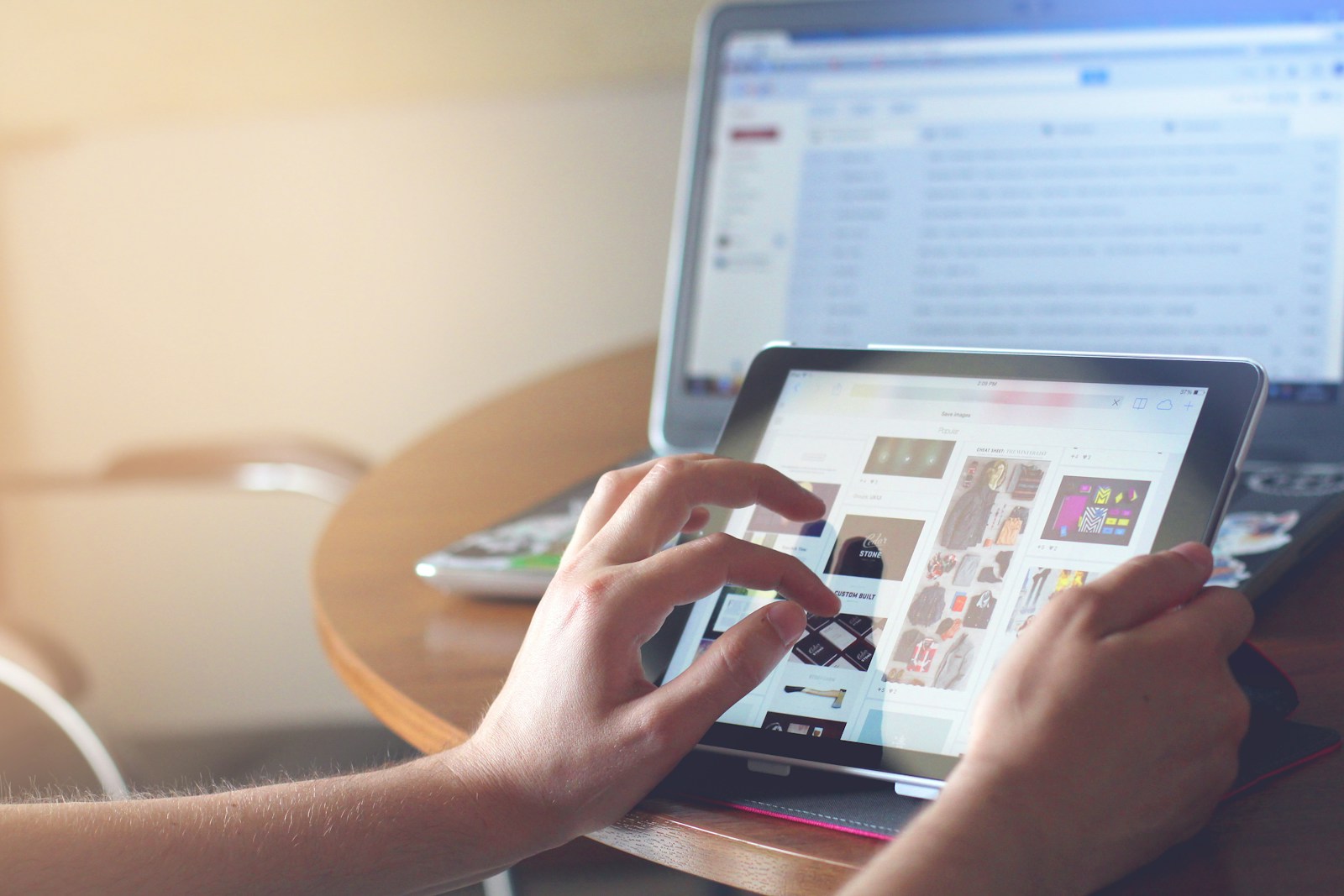
The good news: improving the conversion of existing traffic can produce a massive effect. Going from 1,2% to 1,8% conversion, at equal traffic, is +50% direct bookings. This gain is achieved without media spend : purely by optimising pages, content, UX, and offer.
What you measure improves (without advertising)
Before touching anything, set three simple indicators: (1) conversion rate of the booking engine, (2) share of direct bookings in the mix, (3) average value per booking (AOV). Each action below must target at least one of these three levers.
2) Make your site anti-hesitation: proof, clarity, and speed
A website that looks nice isn’t enough. A website that sells reduces uncertainty all the time. Your goal: answer questions before they’re asked, and stop micro-doubts from piling up.
The elements that tip the balance towards direct
Immediate proof : reviews, rating, comment excerpts, press, authentic photos, guarantees—anything that reduces perceived risk. Clarity : what’s included, terms, times, access, parking, bed, floor area, quiet/noise, policies. Speed : a slow site is a site that loses sales (and you don’t need an ad budget to speed it up).
Many establishments lose direct bookings not because of price, but because the user can’t find the information that matters to them in the right place. On mobile, this is even more true: if the essentials aren’t visible within 5 seconds, they go back to compare… and book elsewhere.
If you rely heavily on platforms, it may also be due to a weak brand effect: the customer discovers you on an OTA, but they don’t understand what makes you unique and trustworthy when booking direct. On this subject, you can explore the issues further in limits of Booking and Airbnb for building a hotel brand.
Hotel Web Design is a Google partner with Google Hotels :
your availabilities and prices are continuously sent to Google, which displays free booking links to your booking page.
These links can represent around 10% to 15% additional commission-free bookings. Read the article on
Google's free booking links
.
3) Your direct promise must be better than the platform (without wrecking your margins)
Offering -10% on our site is tempting, but dangerous: you train your customers to expect a discount, you damage your ADR, and you complicate rate parity. The goal isn’t to be cheaper: the goal is to be more compelling.
Benefits that cost almost nothing
Prioritise benefits with low marginal cost: early check‑in subject to availability, late check‑out, a better room if available, welcome drink, free parking during certain time slots, more flexible cancellation, a local gift, breakfast at a preferential rate when pre-purchased. Even a symbolic advantage, if it is clear and guaranteed, can tip the choice.
The key point: these benefits must be understandable in one sentence, visible near the booking button, and repeated in the booking engine. Otherwise, they don’t exist.
To frame this logic from a profit perspective, you can read (as a supplement) a guide to commission-free booking and maximising margins.
4) Turn OTA visitors into direct customers… without punishing them
A large part of your demand discovers you on Booking or Airbnb. The goal isn’t to remove these channels overnight, but to gradually reclaim the customer relationship.
Start by making sure that your brand is memorable : consistent photos, clear name, precise positioning, repeated promise. Then, use the on-site experience to trigger the next direct booking.
Post-stay triggers that cost nothing
At check-out: a simple sentence (Next time, book on our website: more flexible conditions and direct perks). In the room: an elegant card with a QR code to your booking page. By email: a post-stay message with thanks, direct link, and a perk reserved for customers (not necessarily a discount).
If you use Airbnb, keep in mind that this channel is excellent for filling rooms, but limited when it comes to establishing a sustainable direct journey. To understand why, see this article on the difference between a listing and a real booking website.
5) Make local SEO and brand intent your free engine
Organic search isn’t an ad spend: it’s an asset. You can get additional direct bookings by better capturing high-intent searches: hotel + city + neighbourhood, love room + city, suite with jacuzzi + city, hotel near the station, etc.

Optimisations that pay off quickly
Google Business Profile : categories, services, recent photos, FAQ, posts, NAP consistency. Dedicated pages : one page per room type and per high-intent need (spa, jacuzzi, family, business, event). Useful content : access, parking, routes, neighbourhood comparisons, activities within 10 minutes. This content answers questions that OTAs handle poorly, and it attracts qualified traffic.
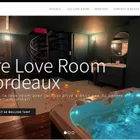
If you’re in an experience segment (e.g. themed suites), take inspiration from structures and presentation approaches that convert: see examples of love-room-focused websites.
6) Fix the friction points in the booking engine (often the #1 source of losses)
You can have a superb website and lose the sale at the critical moment: the booking engine. Too many steps, lack of transparency, confusing calendar, fees revealed too late, no payment methods, or a painful mobile display.
Conversion checklist (with a constant budget)
Transparency : final price visible early, taxes clearly explained, readable terms and conditions. Reassurance : security, payment, cancellation, contact details. Mobile-first : large buttons, minimised fields, Apple Pay/Google Pay if possible. Honest urgency : genuine limited availability, but without aggression.
The booking engine must also highlight your value: direct benefits, flexibility, upgrades subject to availability. If these elements are only on a site banner but absent from the booking engine, you lose the impact at the moment of decision.
For additional operationally oriented leads, you can consult a guide to concrete actions to grow direct bookings.
7) Take back control of the narrative: room pages that sell, not that describe
An effective room page doesn’t just list 20 m², queen bed, shower. It sells an outcome: sleep, calm, intimacy, view, experience, practicality. It sets the scene, answers objections, and provides proof.
Recommended structure for a room page
1) A promise (in one sentence) + 3 benefits. 2) Photo gallery impeccable (lighting, angles, consistency). 3) What’s included (bullet points). 4) Who is this room for (couples, business, family). 5) FAQ (noise, parking, late arrival, amenities). 6) Booking CTA repeated, always visible on mobile.
This is precisely the kind of differentiation an OTA won’t give you: it standardises. Your website can, however, create desirability and trust. To go further on this structural advantage, read Hotel website vs Booking: what your site can do that platforms will never do.

Hotel Web Design is the 100% web agency dedicated to the hotel industry, supporting you in all aspects of digital communication: booking websites, natural search engine optimisation specialising in the hotel industry, Google Ads and Google Hotel Ads, social networking campaigns, graphic charters and logos.
Make an appointment today for free advice on optimal digital management.
8) Use email and SMS as free retargeting (to your own database)
Platforms often own the relationship. Your goal: build your opt-in database (customers, prospects, enquiries) to follow up without advertising.
Three simple scenarios to implement
Booking abandonment : if your system allows it, a short follow-up (You were two clicks away from completing… need help?). Pre-stay : useful info + an upsell proposition (breakfast, decor, champagne, parking). Post-stay : thank you + a gentle nudge to book direct next time.
Content doesn’t need to be long: it must be useful, reassuring, and geared towards the next action. It’s often one of the best levers with no budget because you reactivate people who are already warm.
9) Work on the offer and revenue management before touching marketing
Without additional budget, you can create performance by improving your pricing architecture: packages, smart restrictions, well-presented non-refundable rates, bundles, and exclusive benefits.
Examples of offers that encourage direct bookings
Experience package (dinner + room + late check-out), business package (parking + express breakfast), romantic package (self check-in + ambience + drink). These packages are difficult to compare on OTAs, so they reduce price pressure and make booking direct more attractive.
For other actionable and structured ideas, see a list of tactics to grow direct sales and a complete guide focused on growing direct.
10) Make your website a salesperson: tests, iterations, and practical common sense
Without increasing the marketing budget, your advantage comes from continuous improvement. Test one thing at a time: a headline, a hook, the placement of reviews, the wording of direct-booking benefits, the order of sections, a more visible FAQ, a clearer button.
Simple tests that change everything
Replace Book with See availability, move the Access & parking section up, add 5 frequently asked questions, display direct-booking benefits near the price, shorten forms, make the phone number clickable, add WhatsApp if relevant. None of this requires an ad budget, but each micro-gain added together produces a real increase.
If you want to understand how to structure this work (website, content, conversion, independence from platforms), here is some insight into taking back control of sales via digital.
30-day action plan (without advertising spend)
Week 1: conversion & reassurance — Speed up the website, clarify the terms and conditions, add proof (reviews, FAQ), make CTAs visible on mobile, check that the booking engine is smooth.
Week 2: direct offer — Define 2–3 low-cost direct benefits, display them everywhere (pages, booking engine, confirmation). Create 1 non-comparable package.
Week 3: Local SEO & intent pages — Optimise your Google Business Profile, publish\/refine 3 strong-intent pages (neighbourhood, jacuzzi\/spa, nearby). Add access\/parking content.
Week 4: foundations & reactivation — Set up 2 emails (pre-stay, post-stay) and, if possible, a help message in case of abandonment. Add discreet on-site support to encourage the next direct booking.
Conclusion: more direct without more budget, it’s mainly fewer losses
You don’t need more marketing if your current traffic and existing demand are converting poorly. Direct growth, at a constant budget, comes from a simple combination: a reassuring website, a frictionless booking engine, smart direct advantages, Local SEOand reactivation. . It’s a strategy of execution quality, not spending volume.
If you would like a quick opinion on the high-impact priorities for your property (conversion, page structure, direct offer, mobile journey), you can request Your quote in 5 minutes.









Hotel Web Design is a Google partner with the Google Hotelsincluding our customers benefit on a daily basisGoogle search: information about your accommodation, availability and prices is sent continuously to the search engine, which displays free booking links from the Google search directly to your booking page. These free links represent around 15% of additional commission-free bookings for our customers in 2022! Read our article on free booking links from Google
Booking / reservation website
-
Booking services for hotels and holiday rentals
- Turnkey site with administration interface training on delivery
- Adapted logo and graphic charter. Possibility of using your existing elements
- Hospitality SEO
- Integration of reservations module
- or integration of an external booking engine (Reservit, Availpro, Mister booking, Roomcloud, etc)
- Integration of specific HTML elements (review portals, customer reviews, weather, press, pop-ups, direct chat, etc.)
- Secure SSL / HTTPS
- Multilingual
- Website user interface
- Hosting and domain name
- Fast delivery

Hotel Web Design is the web agency 100% dedicated to the hotel industryWe can help you with all aspects of digital communication for your accommodation: booking websites, natural referencing specialising in the hotel industry, Google Ads referencing and Google Hotel Ads, social networking campaigns, graphic charters and logos for hotels.
Make an appointment today for free advice on how to optimise the digital management of your accommodation.