

commissions Booking Airbnb hotel
When commission is only the tip of the iceberg
On paper, a platform commission looks like a simple line in a table: x % of the room price. In an hotel’s reality, it’s rarely that straightforward. The commission combines with other effects, sometimes more costly than the displayed percentage: downward pressure on rates, dependence on ranking, mobile discounts, more permissive cancellation conditions, and additional operational costs (time, tools, dispute management, accounting reconciliation).
The result is that two hotels showing the same ADR and the same occupancy rate can have radically different profitability depending on their channel mix. And that true cost isn’t just a financial matter: it also affects the commercial strategy, the customer relationship and the hotel’s ability to invest (works, team, experience, marketing).
The direct cost: the displayed commission… and what gets added to it
The first level of cost is of course the commission taken by the platform. Depending on markets, terms, programmes, typologies (hotel vs furnished rental), and the options subscribed to, the percentages move. Some sources mention levels that rise noticeably when you add up the various fees and associated mechanisms; on this subject, you can consult the external article Airbnb, Booking and Abritel commissions amount to 17% in ….

But even if you stick to a standard commission, you need to factor in the following effects:
1) Taxes and the calculation base. Is the commission calculated on the amount incl. VAT or excl. VAT? On the price of extras? Rules vary, and a simple difference in base can make several points of margin over the year.
2) Visibility programmes. Many hotels activate (voluntarily or out of competitive necessity) levers that resemble internal marketing: visibility boosters, participation in offers, Genius-type programmes, mobile promotions. These levers are not always counted as commission, but they reduce net revenue in the same way.
3) Payment costs. Depending on the options (payment by the platform, virtual card, payment at the hotel), you may bear additional fees: bank charges, cash-flow delays, risks of non-payment or chargebacks, processing time.
Indirect cost no. 1: dilution of the average rate (ADR)
A hotel can be full and yet less profitable. Why? Because the platform doesn’t just cost a percentage: it often changes the price at which you agree to sell.
Typical example: you list €120 direct, but to stay competitive on the platform, you activate a 10 % mobile discount or a platform loyalty programme. Your public price becomes €108. Then the commission applies to this reduced price. The real cost is therefore not 15 %, but 10 % discount + 15 % commission on a price that’s already reduced.
In this example: €120 → €108 (discount) → minus 15 % = €91.80 net before operating costs. Compared with a direct sale at €120, the gap is €28.20 per night, i.e. 23.5 % of the initial revenue. And this calculation includes neither payment fees nor the additional workload.

Hotel Web Design is a Google partner with Google Hotels :
your availabilities and prices are continuously sent to Google, which displays free booking links to your booking page.
These links can represent around 10% to 15% additional commission-free bookings. Read the article on
Google's free booking links
.
Indirect cost no. 2: the channel mix that distorts your profit, not just your revenue
Many hoteliers primarily manage occupancy and revenue. That’s necessary, but insufficient. The relevant management is margin per channel (net contribution): how much do you have left after commissions, discounts, payment fees, variable costs (housekeeping, linen, amenities), and acquisition costs (SEA, metasearch, CRM)?
The same month can be misleading: a 10% increase in OTA revenue can mask a margin drop, if that growth comes from easy dates (when you would have sold direct) or if it is achieved via aggressive promotions.
The question to ask is simple: On which dates and which segments do I want to pay a commission? Because paying a commission to fill a high-demand weekend does not mean the same thing as paying a commission to smooth out a quiet Tuesday in November.
Indirect cost no. 3: cancellation, no-shows and schedule instability
Platforms often favour flexible conditions, because they increase conversion on the customer side. For the hotel, this can translate into:
• A higher cancellation rate on certain segments, which forces you to overbook or to accept uncertainty about occupancy.
• A shorter booking window (booking window), which complicates managing teams and purchasing.
• Lost distribution costs when a cancelled booking has blocked a room on a direct channel, or has prevented price optimisation.
The real cost is therefore not only the commission on stays that actually take place, but the opportunity loss due to volatility. For small-capacity hotels, this effect can be brutal: a late cancellation is sometimes a net unsold room, and therefore a margin that disappears.
Indirect cost no. 4: dependency and loss of customer value
When a significant share of your bookings goes through an intermediary, you lose part of the control over the relationship. This is not a theoretical debate: it is a customer lifetime value (LTV) issue. A customer who books direct can be reactivated, retained, upsold more easily (offers, packages, upgrades, retargeting, email). A customer acquired via an OTA often has loyalty first… to the platform.

In the medium term, this means you buy back the same customer several times, by paying a commission again for each stay. On this subject, internal analysis Why booking platforms capture your loyal customers is particularly useful for understanding the mechanism.
Booking vs Airbnb comparison: don’t just look at the percentage
Setting Booking and Airbnb against each other solely on commission is reductive. The two channels do not always bring the same type of demand, nor the same behaviours.
Booking is often very strong in the search for traditional hotels, with a high intent to book, but intense competition and frequent pressure on parity, flexibility and promotions.
Airbnb can offer a different positioning depending on your product (aparthotel, suites with kitchenette, experiences), sometimes with longer stays, but with its own customer expectations, and a listing-page logic that is not that of a hotel website.
To explore these differences in channel choice further, you can consult the external Booking vs Airbnb: Which platform to choose in 2025?, then cross-check these elements with your own reality (type of clientele, average length of stay, seasonality, capacity, level of service).
Practical exercise: calculate net revenue per room sold
To measure the true cost, start from a typical night and calculate a comparable distribution net across channels.
Step 1: set the assumptions
• Public price (BAR): €130
• Platform discount (mobile / programme): 10 %
• Platform commission: 15 %
• Additional payment fees (average): 1.5 %
• Variable costs per room (linen, cleaning, consumables): €18
Step 2: calculate the net before variable costs
Price after discount: €130 × 0.90 = €117
Net after commission: €117 × 0.85 = €99.45
Net after payment: €99.45 × 0.985 = €97.96
Step 3: calculate the contribution (after variable costs)
Estimated net contribution: €97.96 − €18 = €79.96
Compare with a direct booking
If direct you sell at €130 with, for example, 3 % in payment fees and €6 of average marketing cost (SEA/CRM), then:
Net after payment: €130 × 0.97 = €126.10
Net after marketing: €126.10 − €6 = €120.10
Net contribution: €120.10 − €18 = €102.10

Hotel Web Design is the 100% web agency dedicated to the hotel industry, supporting you in all aspects of digital communication: booking websites, natural search engine optimisation specialising in the hotel industry, Google Ads and Google Hotel Ads, social networking campaigns, graphic charters and logos.
Make an appointment today for free advice on optimal digital management.
Contribution gap: €102.10 − €79.96 = €22.14 per night. Over 2,000 OTA room nights/year, this represents €44,280 of potential margin lost, at the same volume.
The trap of more profitable platforms: it all depends on your model
You often read comparisons that try to decide which platform is the most profitable. The reality: profitability depends on your operating cost, your average basket, length of stay, your ability to sell extras, and the share of incremental demand (customers you wouldn’t have captured otherwise).
Further reading on the arbitrage side is available via the external Booking vs Airbnb: which platform is the most profitable …, but the right reflex is to bring the question back to your numbers: Which channel brings me additional bookings on the dates when I need them, at the lowest cost, with the fewest constraints?
The hidden cost: operational time and complexity
Distribution via platforms has an often underestimated organisational cost:
• Managing messages and specific requests (late arrivals, twin beds, conditions).
• Disputes and mediations (cancellation, refund, perceived non-compliance).
• Setting up rates and restrictions (minimum stay, closed to arrival, promos).
• Accounting reconciliation (virtual cards, commissions, tourist taxes, invoicing).
If your team spends 1 to 2 hours a day managing the platform, that time has value. And if that time prevents you from working on direct (campaigns, local partnerships, quality of the experience), the opportunity cost can be much higher than the commission.
Why the platform wins even when you’re full
Many hotels tolerate high dependency because it fills rooms. The problem: when you’re full, the platform doesn’t help you maximise your profit; it takes its cut on inventory that’s already scarce. In an ideal world, the OTA mainly serves to smooth out the troughs. In practice, it also captures the peaks, especially if your direct site converts poorly or if your rates aren’t clear enough.
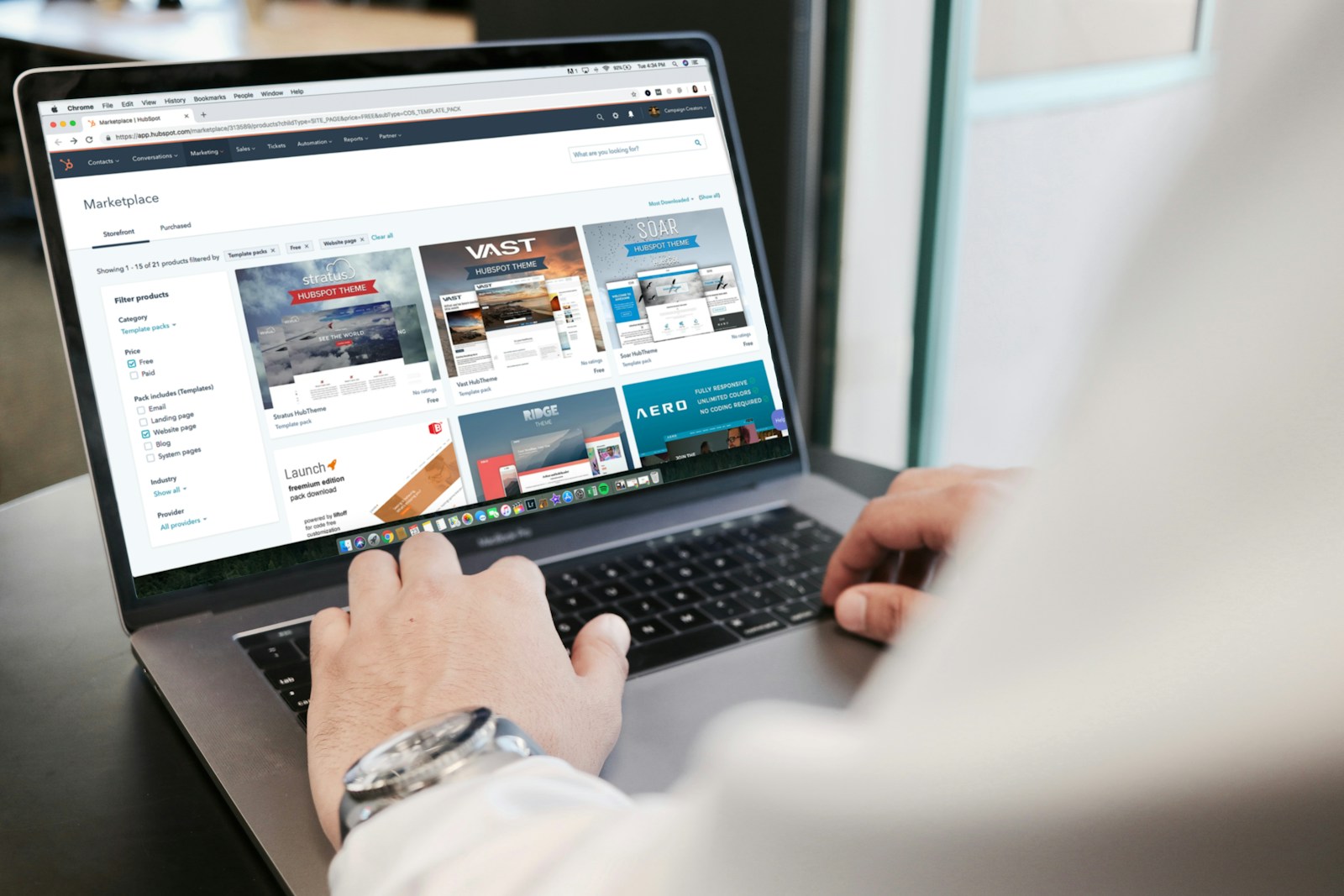
The diagnosis is often simple: if your hotel is very well located, well rated, and yet the share of direct bookings remains low, there is probably an issue with the booking experience on the website side, reassurance, pricing, or marketing visibility.
Practical levers to reduce the real cost… without cutting off the platforms
The aim is not necessarily to leave Booking or stop Airbnb. In most cases, the realistic goal is to use the platforms as a controlled acquisition channel, while increasing the share of profitable direct sales.
1) Turn OTA audiences into direct demand (without putting yourself at risk)
Some travellers discover your property on a platform. The challenge is to capture their interest and give them a good reason to book direct next time (or for other dates), by working on the experience, the service, and communication that complies with the rules. For operational pointers, see How to turn visitors into direct customers.
2) Fix what pushes your customers towards the OTA
Often, hotels lose direct bookings for very down-to-earth reasons: a booking engine that is too slow, lack of payment methods, unclear cancellation policy, insufficient photos, unclear rates, or no direct-booking benefits (breakfast, parking, upgrade subject to availability). The internal article The mistakes that push your customers to book on Booking rather than on your website helps to identify the most common points.
3) Invest in a website that sells (and measure contribution, not just traffic)
A good website is not an extra marketing cost: it is a distribution asset. If it increases your conversion rate and your share of direct bookings, it mechanically reduces your commission-based dependency. To step back and look at the trade-off, read Hotel website: investment or unnecessary cost.
4) Optimise the web design to increase direct bookings
Direct conversion is not a question of aesthetics: it is a chain of micro-decisions (trust, clarity, social proof, journey friction, mobile). Structured work can have a major impact on the share of direct bookings, and therefore on margin. Explore further via How good web design can double direct bookings.
Your quote in 5 minutes
Arbitrate intelligently: pay a commission only when it creates value
The right use of the platforms is to define clear arbitration rules:
• Peak dates: limit promotions, control inventory, push direct, increase restrictions if necessary.
• Low-demand dates: accept a higher acquisition cost if demand is genuinely incremental (better than leaving rooms empty).
• Specific segments: if Airbnb brings in long stays in the low season, the cost can be acceptable even with a high commission, because it reduces turnover costs (cleaning/linen) and stabilises the schedule.
• Mix objective: set a target (e.g. 45% direct / 55% intermediaries) and manage it monthly.
Also look at the ecosystem: taxation, status, and operating model
Depending on whether you operate a traditional hotel, an aparthotel, a residence, or units under LMNP, the way you read the cost and the platforms changes. Some comparisons address this more status-based angle; you can consult the external Booking or Airbnb: Which to choose for your LMNP rental? to see how the choice of platform can fit into a different economic model. Even if you are a hotelier, this can shed light on certain trade-offs (length of stay, basket size, turnover costs, pricing strategy).
Conclusion: commission isn’t a percentage, it’s a model of dependence (or a controlled lever)
The true cost of platforms is not limited to the commission line. You must add to it the discounts to gain visibility, the pressure on ADR, the instability linked to cancellations, payment fees, operational time, and above all the loss of customer value when an intermediary captures the relationship.
The right strategy is not to demonise Booking or Airbnb, but to decide when the commission really buys an additional booking, and when it is merely skimming demand that you could capture directly. From the moment you measure net contribution by channel, you regain control: you stop optimising occupancy at any price and you start managing profitability again.
Take action: measure your lost earnings and build a direct plan
If you want to quickly quantify the impact of your channel mix (commission, discounts, direct conversion) and prioritise the actions that increase margin, you can request Your quote in 5 minutes.













Hotel Web Design is a Google partner with the Google Hotelsincluding our customers benefit on a daily basisGoogle search: information about your accommodation, availability and prices is sent continuously to the search engine, which displays free booking links from the Google search directly to your booking page. These free links represent around 15% of additional commission-free bookings for our customers in 2022! Read our article on free booking links from Google
Booking / reservation website
-
Booking services for hotels and holiday rentals
- Turnkey site with administration interface training on delivery
- Adapted logo and graphic charter. Possibility of using your existing elements
- Hospitality SEO
- Integration of reservations module
- or integration of an external booking engine (Reservit, Availpro, Mister booking, Roomcloud, etc)
- Integration of specific HTML elements (review portals, customer reviews, weather, press, pop-ups, direct chat, etc.)
- Secure SSL / HTTPS
- Multilingual
- Website user interface
- Hosting and domain name
- Fast delivery

Hotel Web Design is the web agency 100% dedicated to the hotel industryWe can help you with all aspects of digital communication for your accommodation: booking websites, natural referencing specialising in the hotel industry, Google Ads referencing and Google Hotel Ads, social networking campaigns, graphic charters and logos for hotels.
Make an appointment today for free advice on how to optimise the digital management of your accommodation.