

Artificial intelligence typography: the relationship between algorithmic tools and lettering is no longer a laboratory curiosity, but a daily lever for studios, brands and product teams. We are seeing the emergence of fonts that adapt to context, composition systems that learn from reading constraints, and workflows where experimentation is taking place at an unprecedented speed. At the same time, new issues are emerging: consistency of identity, reliability of generators, rights, quality of curves, accessibility and Web performance.
When typography becomes a dynamic system rather than a file
The first major transformation is not the style generated as such, but the change in the nature of the font. For a long time, a typeface was treated as a finished product: a set of glyphs, metrics, OpenType tables, and then a more or less fixed usage. With AI, typography becomes more of a system: a space of possibilities that can be navigated according to an objective (legibility, tonality, ink savings, information density, brand differentiation, etc.).
In interfaces, this logic is illustrated by adaptive behaviour: a font can change its proportions according to the width available, its contrast according to the dark mode, its weight according to the level of attention expected, or its lettering according to the language displayed. Designers no longer simply choose a font; they define a framework of variations and rules.

This shift towards parameter-based control brings typography closer to systems design practices: tokens, components, states, constraints. The font becomes a parametric material that interacts with the page layout, animations, content density and reading environments (mobile, TV, e-ink, augmented reality). This is an area where AI excels: optimising a typographic response to a multitude of contexts, and proposing relevant compromises in real time.
Variable typefaces + AI: creative acceleration and algorithmic humanism
The encounter between variable fonts and AI is one of the most visible drivers of this evolution. Variable fonts already offer axes (weight, width, inclination, optical size, etc.). AI, on the other hand, adds a layer of intelligence: it helps to explore the design space, to suggest points of balance, to interpolate coherent styles, or to generate variants that respect an intention (serious, warm, technical, editorial).
From a creative point of view, this changes the way we prototype. Instead of manually trying out 30 combinations of weight/width/contrast for a page, you can ask the system to suggest dozens, sorted according to criteria of legibility or personality. The typographer retains control of the artistic direction, but exploration becomes faster and broader.
This dynamic is particularly relevant when we are aiming for a balance between rigour and expressivity: humanist graphic design in which the letter retains a sensitivity, a controlled irregularity, a breath of air. To find out more about this angle, see the external article AI and variable typography in the service of humanist graphic design is a good example of how these technologies can serve a visual purpose rather than replace it.
From creating glyphs to creating families: what AI really automates

Hotel Web Design is a Google partner with Google Hotels :
your availabilities and prices are continuously sent to Google, which displays free booking links to your booking page.
These links can represent around 10% to 15% additional commission-free bookings. Read the article on
Google's free booking links
.
In practice, AI doesn't just invent letters; it automates entire stages of the typographic pipeline:
1) Sketching and track generation Suggest design directions (endings, proportions, contrasts) based on a brief or examples.
2) Character set extension derive accents, variants, punctuation, currency signs and symbols in a way that is consistent with the base.
3) Multi-style production : in bold, italics, condensed/extended, small caps, etc., while retaining the identity.
4) Kerning and metrics These include suggesting kerning pairs, adjusting spacing and detecting collisions or inconsistencies.
5) Quality control identify problematic curves, superfluous points, discontinuities, inconsistent extrema or incomplete OpenType tables.
What has changed above all is the scale: where hand-crafted work would take weeks (or even months) to produce an extensive and robust family, AI can produce a base that can be used very quickly. But usable does not mean finished: the gap between an attractive rendering in a mock-up and a reliable font in production (Web, print, multi-language) remains considerable.
AI in web typography: performance, legibility and UI consistency
In Web design, AI influences typography in a less visible but decisive way. Font is no longer a simple aesthetic choice: it is a component of performance (file weight), accessibility (legibility, dyslexia-friendly, contrasts), coherence (headings/paragraphs/buttons), and branding.
Where AI becomes useful is in arbitration. It can, for example, recommend :
- sizes and line spacing optimised for line length and medium ;
- a pair of fonts (titles/text) consistent with a brand personality ;
- tracking settings to prevent reading fatigue ;
- a loading strategy (subset, unicode-range, preloading) that minimises FOIT/FOUT effects.
The value of these recommendations is enhanced when they are integrated into an overall visual structure. To link typography and the organisation of information, see a guide to the visual hierarchy, A perfect font doesn't make up for a poorly constructed hierarchy.
AI and brand identity: typography as a differentiating signal (or banalization)
For a long time, brands have relied on typography to establish a territory: a signature, a cadence, a form of trust. AI has upset this balance: it facilitates access to quality styles, but it also makes convergence towards similar aesthetics more likely, because models learn from similar corpora and many teams demand... modern, legible, premium results. .

The risk of trivialisation is not inevitable. It depends on how AI is used:
- Generic use : prompt waves, quick selection, little customisation → standardisation.
- Directed use : precise brief, typographic constraints, retouching, multi-media testing → enhanced differentiation.
Typical trends in the ecosystem show the extent to which AI is already influencing visual identity. On this subject, the report mentioned in the influence of AI on the visual identity of brands highlights the directions that typographic choices are taking when automation and data are involved in decision-making.
Reliability, trust and control: why generating is not enough
While AI speeds things up, it can also make things more fragile. A font may look fine on screen but prove problematic in production: inconsistent spacing, badly centred accents, unexpected behaviour in bold, degraded rendering in small sizes, or insufficient language coverage. Not to mention the issues of licences, source of training data and software compatibility.
The question of trust therefore becomes central: can an automatically generated font be deployed in a critical context (international brand, banking application, signage, publishing)? What guarantees are there on quality, rights and reproducibility? The debate is well summed up by a viewpoint on confidence in the policies generated, which reminds us that enthusiasm must be accompanied by validation procedures.
In a mature workflow, AI does not replace control: it displaces it. We are moving from checking each manual step to checking more outputs. This involves checklists, automatic tests (multi-browser rendering, critical sizes, languages), and human validation in sensitive cases (brand titles, logotypes, signage).
Font generation: from prototype to industrialisation
AI font generation tools promise one thing: to reduce the time between an intention (a style) and a usable typographic object. In reality, there are often two uses:
- The express prototype Creating a plausible font for the layout, testing an identity and validating an atmosphere.
- The production base This involves generating a solid skeleton, then going through a phase of editing, extension and typographic engineering.
The second use is the most demanding, because invisible details must be ensured: OpenType tables, any hints, consistency of metrics, ligature management, multilingual set, symbol support, etc. A useful resource for understanding the issues surrounding these fonts is a dossier on AI-generated fonts, which looks at the future of typography from the point of view of tools and production.

Hotel Web Design is the 100% web agency dedicated to the hotel industry, supporting you in all aspects of digital communication: booking websites, natural search engine optimisation specialising in the hotel industry, Google Ads and Google Hotel Ads, social networking campaigns, graphic charters and logos.
Make an appointment today for free advice on optimal digital management.
The designer's role is changing: direction, curation, testing and scenarios
With AI, the value shifts to the ability to :
- writing a typographic brief clear (use, media, tone, legal constraints, languages) ;
- clean proposals (eliminating the superficial, detecting incoherence) ;
- test (small sizes, contrasts, poor screens, printing, fast reading) ;
- script usage (titles, UI, data viz, forms, errors, disabled states) ;
- industrialise (naming, versions, documentation, guidelines for use).
This role is similar to that of an art director + system design engineer: someone who doesn't necessarily draw every curve, but who guarantees intention, coherence and robustness. In this context, understanding how models learn and generalise becomes an asset. For a more technical view of the Web, this content on neural networks and deep learning helps to clarify what the AI can (and cannot) infer when asked for a typographic style. .
Typography, layout and effects: AI promotes more responsive typesetting
Beyond the letter, AI influences the composition. It can suggest grid rules, anticipate overflow, or adapt the text to the container without breaking the hierarchy. This can be seen in page layout systems that automatically adjust the length of lines, the size of headings or the density of paragraphs according to the device.
This approach becomes even more interesting when the typography interacts with movement: text that responds to scrolling, headings that narrow, variations in weight that accompany a narrative. The challenge is to remain legible and sober. If you're working on narrative pages, an article on parallax scrolling effects can be used as a basis for thinking about animated typography without sacrificing accessibility.

Grids, sections, columns: AI enhances structured typography
A font, even an excellent one, can be badly perceived if the structure is confusing. But AI, used as an assistant, often pushes towards more systematic page layouts: it likes constraints, because they make optimisation possible. On the Web, this means a return to explicit grids, clearly hierarchical sections, and columns adapted to reading rhythms.
When you combine variable grids + typography, you get pages that can adjust density without losing their logic. For example: a landing page can switch from a 12-column grid on the desktop to a stacked structure on mobile, while automatically modulating the font width axis to maintain a comfortable line length. To anchor this approach, a reminder of the basic grids/sections/columns is particularly relevant: AI amplifies these fundamentals, it does not replace them.
Business implications: speed of production, A/B testing and cross-channel consistency
From the point of view of organisations, the impact is twofold: acceleration and measurement. Teams can test typographic variants more quickly (more condensed headlines, heavier weighting, increased line spacing) and link these choices to indicators: reading rates, comprehension, conversion, perception of trust.
This logic can also go off course: optimising solely for clicks can lead to aggressive, overly contrasting or overly marketed typography. Typography is a reading contract, not just a performance lever. In highly competitive environments (hotels, reservations, marketplaces), the brand is sometimes captured by advertising platforms and acquisition constraints, which indirectly influences typographic choices (standardisation, search for signals of trust). On this subject, an analysis of the use of brands in acquisitions reminds us that identity (including typography) is also a strategic issue, not just an aesthetic one.
What's in it for us (really): accessibility, language coverage and personalisation
When used properly, AI can improve aspects that have long been neglected:
- Accessibility These include detection of insufficient contrast, recommendations for minimum sizes, and vigilance with regard to ambiguous shapes (I/l/1, O/0).
- Language coverage : help with extending glyph sets, consistency of diacritics, support for multiple scripts (with caution and validation).
Your quote in 5 minutes
- Controlled customisation adapt the typography to a particular context (long reading vs. fast scanning), without changing the brand, using variable axes or composition rules.
These are tangible gains, provided that typography is considered as a communication infrastructure and not simply as a window dressing. .
What we risk: standardisation, typographic debt and legal grey areas
The risks are as great as the promises:
- Visual standardisation if the teams are content with satisfactory results without strong artistic direction.
- Typographical debt Fonts deployed too quickly, little tested, difficult to maintain (versions, corrections, compatibility).
- Legal ambiguities data provenance, unintentional similarities, conditions of use of generators.
- Loss of singularity if brand typography becomes an interchangeable parameter rather than an asset.
These risks call for governance: documentation, selection criteria, and validation comparable to that of a critical UI component.
Towards assisted rather than replaced typography
The most robust future is neither 100 % manual, nor 100 % automated. It's assisted typography, where AI is used to explore, suggest, verify, and accelerate, while humans retain responsibility: intent, visual culture, reading sense, and final choices. This idea is well reflected by an overview of the AI-driven revolution in typography, which shows how practices evolve rather than disappear.
In this model, the best skill is not just generating a font, but building a complete typographic system: variables, rules, exceptions, tests and guidelines, with constant attention to legibility and meaning.
Putting AI to work for your typographic system: where to start
A pragmatic implementation can follow three stages:
1) Clarifying uses UI, editorial, print, signage, data viz, languages, technical constraints.
2) Building a base 1-2 fonts max, variable if possible, hierarchy rules, grid, typographic tokens.
3) Add AI as an optimisation layer : suggested settings, automated tests, exploration of variants, quality control.
If you want to quickly frame a project (typographic choices, UI direction, performance constraints, brand consistency), you can launch the discussion via Your quote in 5 minutes.





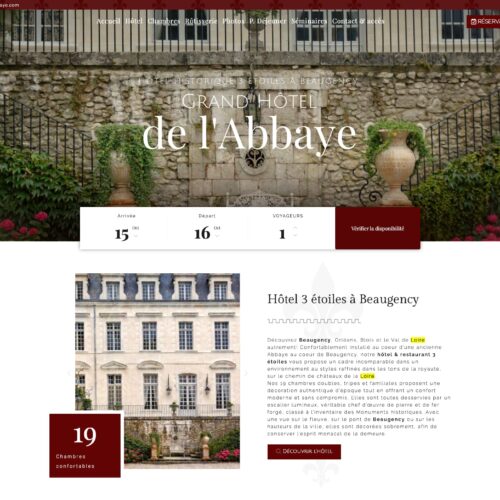

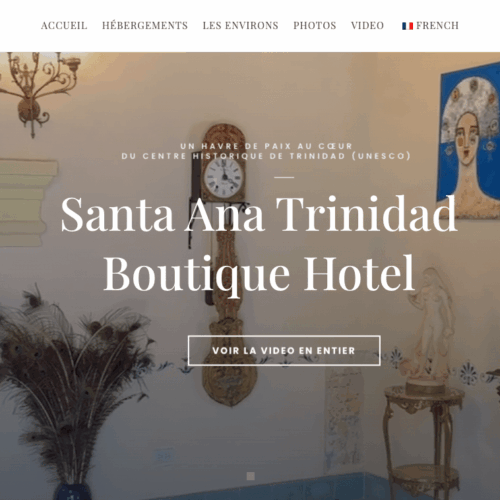










Hotel Web Design is a Google partner with the Google Hotelsincluding our customers benefit on a daily basisGoogle search: information about your accommodation, availability and prices is sent continuously to the search engine, which displays free booking links from the Google search directly to your booking page. These free links represent around 15% of additional commission-free bookings for our customers in 2022! Read our article on free booking links from Google
Booking / reservation website
-
Booking services for hotels and holiday rentals
- Turnkey site with administration interface training on delivery
- Adapted logo and graphic charter. Possibility of using your existing elements
- Hospitality SEO
- Integration of reservations module
- or integration of an external booking engine (Reservit, Availpro, Mister booking, Roomcloud, etc)
- Integration of specific HTML elements (review portals, customer reviews, weather, press, pop-ups, direct chat, etc.)
- Secure SSL / HTTPS
- Multilingual
- Website user interface
- Hosting and domain name
- Fast delivery

Hotel Web Design is the web agency 100% dedicated to the hotel industryWe can help you with all aspects of digital communication for your accommodation: booking websites, natural referencing specialising in the hotel industry, Google Ads referencing and Google Hotel Ads, social networking campaigns, graphic charters and logos for hotels.
Make an appointment today for free advice on how to optimise the digital management of your accommodation.