

reduce OTA commissions
A poorly designed website: the silent machine that drives up your OTA commissions
You can negotiate, optimise your listings, adjust your prices… but if your official site is poorly designed, it acts like a leaky funnel: it lets direct bookings escape and mechanically redirects your customers to OTAs. Result: more dependency, higher acquisition costs, and commissions that increase naturally without you feeling like you changed anything.
The trap is that the rise in commissions is not always due to an increase in the percentage charged by the OTA. It often comes from a change in the mix: you generate less direct business, so the OTA share rises. And when the OTA share rises, you end up buying even more visibility (preferred programmes, upgrades, sponsored promotions), which further increases your distribution cost.
1) Too slow: when every extra second sends your customers to Booking
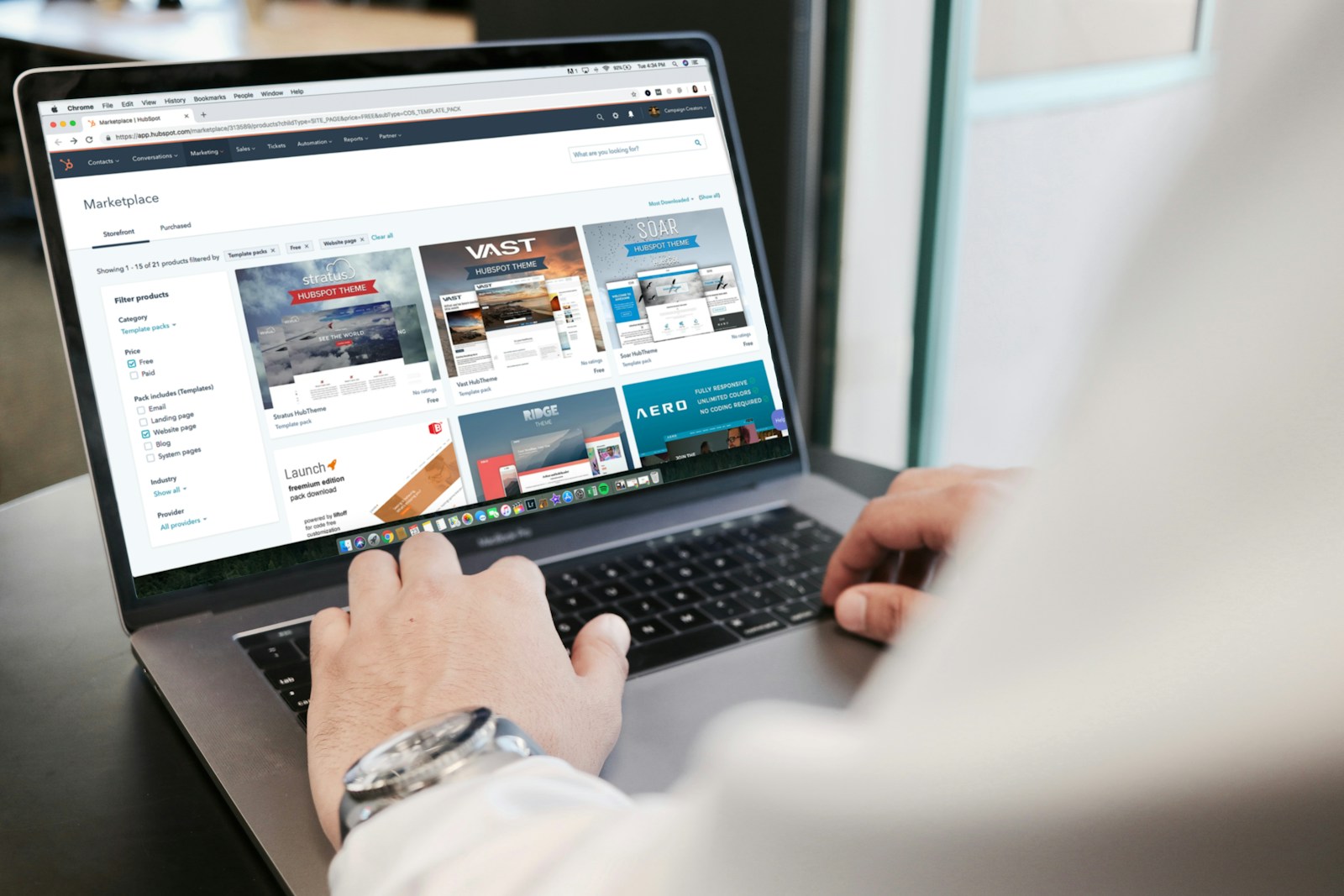
A slow site not only loses visitors: it redirects their decision. Travellers compare quickly, on mobile, sometimes with an average connection. If your page takes too long to load, they go back to Google and click the OTA, which loads faster and reassures them with a familiar booking flow.
Concretely, slowness increases:
– the bounce rate (so fewer direct enquiries and bookings); ;
– marketing cost (your campaigns drive to a site that does not convert); ;
– the OTA premium (because the user ends up booking where it is simple and immediate).
If you want to see how this dynamic comes into play and why it directly benefits the intermediary, read this article on the impact of a slow website.
2) A design that does not reassure: you pay a commission to buy trust
OTAs have understood one thing: trust converts. They invest in reviews, badges, clear cancellation policies, standardised content and continuously tested interfaces. An establishment's site, meanwhile, often falls into one of these pitfalls:
– outdated aesthetics (or too generic a template); ;
– heavy photos, poorly cropped, low quality; ;
– lack of key information (parking, opening hours, terms, accessibility, facilities); ;
– vague text, written for marketing rather than decision-making. .
In this context, booking directly becomes a risky act. And when trust is lacking, the user chooses the platform: not because it is cheaper, but because it seems safer. You then pay a commission to compensate for a credibility deficit… which sometimes stems only from an insufficiently worked site.
3) A complicated booking process: commission as a tax on simplicity
A direct funnel that requires too much effort flips the decision. The signals of a poorly designed journey are easy to spot:
– 'Book' button hard to see, sometimes lost in the menu; ;
– too many steps; ;
– long forms, unnecessary fields, baffling errors; ;
– lack of clarity about the final price, taxes, conditions; ;

Hotel Web Design is a Google partner with Google Hotels :
your availabilities and prices are continuously sent to Google, which displays free booking links to your booking page.
These links can represent around 10% to 15% additional commission-free bookings. Read the article on
Google's free booking links
.
– calendar hard to use on mobile.
OTAs, meanwhile, have industrialised simplicity: few steps, clear labels, stored payment methods, a well‑honed upsell logic. An official site that imposes friction, even slight, turns the OTA into the easy option. And the more the OTA becomes the easy option, the more your share of indirect sales rises, so your total commissions climb.
4) Mobile neglected: half your customers simply don’t want to fight
The majority of searches and a growing share of bookings are made on mobile. Yet many hotel, guesthouse and rental sites remain painful to use:
– text too small, buttons too close; ;
– heavy menus, intrusive pop-ups; ;
– content that loads poorly; ;
– booking engine not optimised for mobile.
A poor mobile experience produces an immediate effect: the user files away the idea… then books later on an OTA, or instantly switches to the OTA because the display is smoother there. In both cases, direct loses the race.
5) Insufficient SEO and content: you let OTAs capture your branded demand
When your site is weak on SEO (structure, dedicated pages, local content, technical performance), OTAs take the space. This even affects branded searches: Hotel X + city, establishment name + reviews, rooms + name. If the OTA appears above you, it captures your hottest traffic — those who were already intending to come to you.
A poorly designed site often means:
– few useful pages (everything is on a homepage); ;
– titles and content that are too vague; ;
– no pages for room types, offers, events, the local area; ;
– images without optimisation, heavy code; ;
– duplicated or overly short content.
Result: you lack direct organic entries and instead buy more of your customers via platforms.
6) No differentiation: you force the customer to compare prices on OTAs
If your site does not clearly explain why to stay with you (and not elsewhere), the traveller cannot decide. They then go to compare. And the place where comparison is easiest is the OTA: sort by price, filters, maps, cancellation, ratings…
Poor design results in an overly generic promise:

– warm welcome, exceptional setting, ideally located; ;
– no proof (photos, details, figures, concrete information); ;
– no arguments by guest type (couples, families, business travellers, hikers, etc.).
When you do not give a reason to book now, you encourage comparison. And comparison often ends on a platform, therefore with commission.
7) Invisible direct offers and benefits: you give no good reason to buy from you
Direct doesn't need to be cheaper to win. It must be clearer, more relevant, more advantageous on things that matter: flexibility, attention, services, experience, terms. But if these advantages are not visible, you let the OTA become the reference.
Typical direct benefits (when they are real):
– better cancellation terms; ;
– earlier check-in / later check-out subject to availability; ;
– breakfast or parking offered as a favourable option; ;
– upgrade subject to availability; ;
– direct contact, special requests handled personally.
You still need to display them in the right place: near the booking button, in the engine, on room pages, and in a concise "direct benefits" section. Without that, you end up paying the OTA to do what your site could have triggered for free: the decision.
8) A website that does not compensate for your reduced visibility on platforms
Algorithms and competition on platforms evolve. One day you're well placed; the next, a competitor joins a programme, lowers their prices, invests in advertising or gets more recent reviews. If your site is weak, you suffer: you don't have a solid plan B to absorb the OTA traffic drop.
Conversely, an optimised site can cushion these variations by capturing more direct bookings, improving conversion rate and strengthening your brand. To understand this compensatory logic, you can consult How an optimised website can offset a drop in visibility on Booking.
9) The illusion that OTAs protect me: they mainly protect their model
A poorly designed site reinforces a common reflex: I rely on OTAs, so I must pamper them. But platforms have one objective: to maximise conversion on their interface and keep the customer within their ecosystem. They are not intended to defend your positioning, your margin or your customer relationship.

Hotel Web Design is the 100% web agency dedicated to the hotel industry, supporting you in all aspects of digital communication: booking websites, natural search engine optimisation specialising in the hotel industry, Google Ads and Google Hotel Ads, social networking campaigns, graphic charters and logos.
Make an appointment today for free advice on optimal digital management.
The risk is to delegate:
– the relationship (the customer remembers the OTA more than you); ;
– loyalty (platform-side loyalty programmes); ;
– the ability to assert your value (you become a comparable product).
To go further on this structural reality, the article on the fact that platforms will not defend your establishment clarifies why dependency is rarely a sound calculation.
10) When the site fails, you over-invest in OTAs… and the commissions pile up
The mechanism is almost always the same:
– the site converts poorly; ;
– direct bookings don’t take off; ;
– to fill rooms, you increase the OTA share; ;
– to stay visible on the OTA, you activate paid levers (promos, programmes, ads); ;
– your total distribution cost climbs.
In the end, you don’t just pay a commission. You pay for a fill strategy based on intermediation, sometimes reinforced by options that look like disguised advertising.
What a well-designed site changes (and why that mechanically reduces your commissions)
The aim is not to hate OTAs: they remain useful, notably for international visibility, quiet periods, or certain segments. The aim is to rebalance your mix so that the OTA is a channel, not the channel.
A well-designed website affects three key variables:
- more qualified traffic (local SEO, content, useful pages); ;
- more conversion (speed, mobile, reassurance, simple funnel); ;
- more perceived value (differentiation, proof, direct benefits).
The web levers that actually shift the mix
This is not a single hack, but a coherent set: performance, mobile UX, clarity of offers, social proof, local content, a reliable engine, and decision-oriented messages. A structured summary of these actions is available in a guide to the web levers to take back control.
Common misconceptions that sustain poor website choices
Many establishments keep a weak website because they rely on beliefs:
– People always book on third-party platforms; ;
– My website is just to have a presence; ;
– If I lower my direct prices, that will be enough; ;
– OTA reviews are unavoidable, so might as well leave everything there. .
In reality, a significant portion of travellers are willing to book direct if the experience is smooth and the offer is clear. To separate fact from fiction, you can read these misconceptions about OTAs.
Strategy: think sustainable direct, not an anti-OTA quick fix
A good website is not a graphic project. It is a central piece of a sustainable strategy: acquisition (SEO/SEA), conversion (UX), reassurance (proofs), and loyalty (relationship). Without this foundation, you'll quickly fall back into the same patterns: filling via OTAs, paying for extras, accepting a lower margin.
To structure an approach that stands the test of time, consult this plan to build a sustainable direct-booking strategy.
Useful resources: act smartly with OTAs without being absorbed
The issue is not binary. You can improve your profitability by combining a solid website with a more tactical use of platforms. In that regard, some resources can help you make better trade-offs:
– For concrete ideas to cut costs and optimise, these strategies to reduce OTA commissions provide a good overview.
– To understand how to maximise what platforms can bring without losing your identity, these tips to get the most out of OTAs may inform your thinking.
– To improve your performance on platforms (when you use them) while working on your mix, these OTA tips focused on bookings provide actionable ideas.
– And if you run a guest house and are looking for alternatives to attract more travellers without intermediary fees, this commission-free approach can give you additional angles.
Checklist: 12 signals that your site is increasing your commissions
1) Perceptible loading time on mobile.
2) Booking button poorly visible or absent above the fold.
3) Engine difficult to use, frustrating calendar.
4) Final price unclear (taxes, conditions, surcharges).
5) Average or too-heavy photos, pages jumping on load.
Your quote in 5 minutes
6) Cancellation terms hard to find.
7) Few dedicated pages (rooms/offers/activities/access).
8) Generic text, little concrete evidence.
9) Reviews and testimonials absent (or poorly showcased).
10) No direct benefits displayed at the right time.
11) Forms too long, error messages incomprehensible.
12) The site looks like everyone else's: no clear differentiation.
Conclusion: commission is not always a rate; it is often a consequence
A poorly designed website increases your OTA commissions because it weakens your ability to capture and convert demand that belongs to you. With every friction point, you hand a little more power (and margin) to the intermediary. Conversely, a fast, clear, credible and conversion-focused site doesn’t eliminate OTAs — it simply puts your property back in a position of strength, with a healthier mix and a more controlled distribution cost.
Do you want to know how many direct bookings you lose because of your website?
Request a quick estimate In a few minutes, we can identify the main bottlenecks (speed, mobile, journey, reassurance) and estimate realistic gains for your direct share.













Hotel Web Design is a Google partner with the Google Hotelsincluding our customers benefit on a daily basisGoogle search: information about your accommodation, availability and prices is sent continuously to the search engine, which displays free booking links from the Google search directly to your booking page. These free links represent around 15% of additional commission-free bookings for our customers in 2022! Read our article on free booking links from Google
Booking / reservation website
-
Booking services for hotels and holiday rentals
- Turnkey site with administration interface training on delivery
- Adapted logo and graphic charter. Possibility of using your existing elements
- Hospitality SEO
- Integration of reservations module
- or integration of an external booking engine (Reservit, Availpro, Mister booking, Roomcloud, etc)
- Integration of specific HTML elements (review portals, customer reviews, weather, press, pop-ups, direct chat, etc.)
- Secure SSL / HTTPS
- Multilingual
- Website user interface
- Hosting and domain name
- Fast delivery

Hotel Web Design is the web agency 100% dedicated to the hotel industryWe can help you with all aspects of digital communication for your accommodation: booking websites, natural referencing specialising in the hotel industry, Google Ads referencing and Google Hotel Ads, social networking campaigns, graphic charters and logos for hotels.
Make an appointment today for free advice on how to optimise the digital management of your accommodation.