
perceived value hotel rooms
A well-designed website sells the room even before arrival
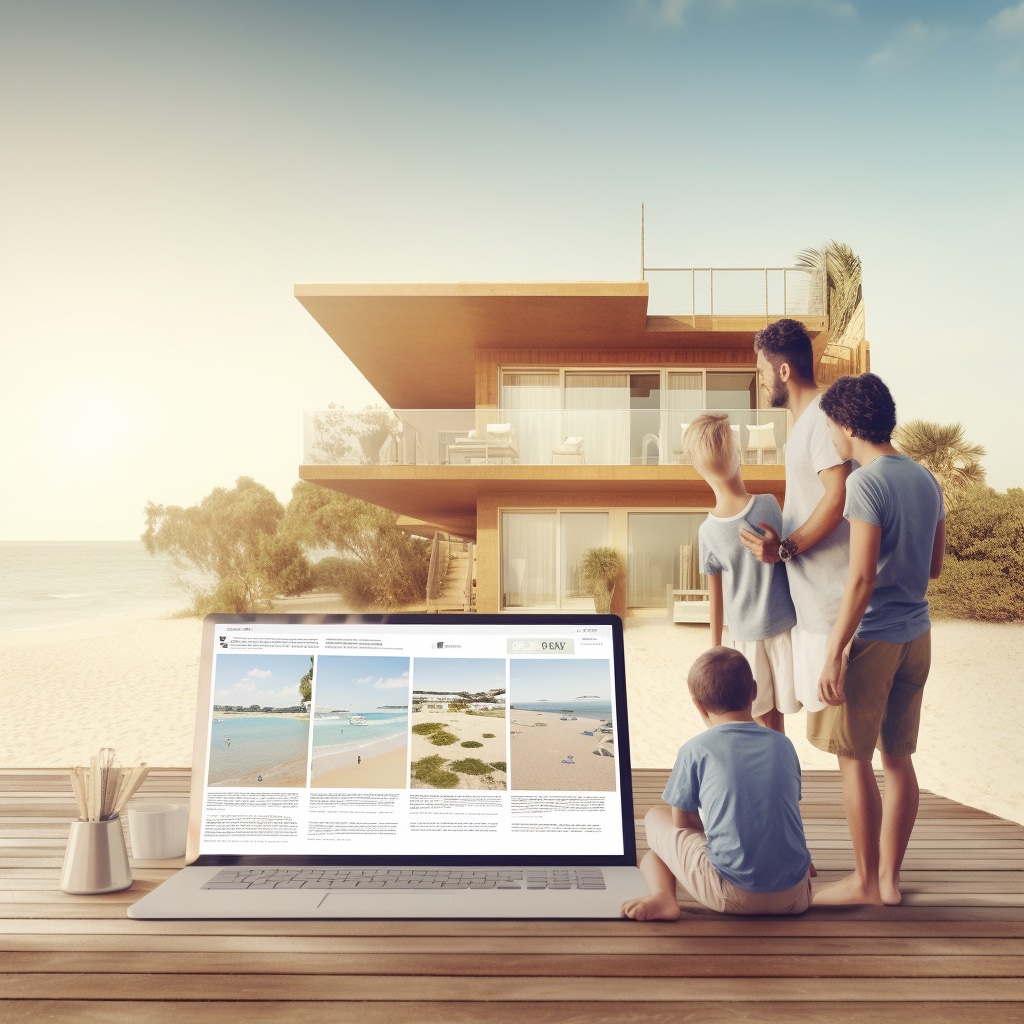
Before comparing square metres, bed size or the view, a guest forms an impression of your property within seconds. This initial impression is not about taste: it shapes trust, projection and ultimately the willingness to accept a price. A well-designed site therefore does more than present your rooms; it stages a coherent, reassuring experience that gives the rate an obvious meaning.
When the user instantly understands what they will experience (level of comfort, style, attention to detail, tranquillity, useful services), the room seems more desirable. And when navigation is smooth, they also perceive your property as better organised, more reliable, more professional. In hospitality, this sum of signals acts as a multiplier: with equal offering, the clearest, most appealing and most credible site increases willingness to pay.
The first impression: design, readability and brand coherence
Design is not an aesthetic add-on: it is a language. Typefaces, colours, iconography, page rhythm, choice of photos… everything communicates a positioning. A hotel targeting a premium audience but whose site looks like an outdated template sends a conflicting message: we charge more, but we don't control our image. Conversely, a strong, coherent visual identity gives the impression of a well-managed place where quality is invested in.
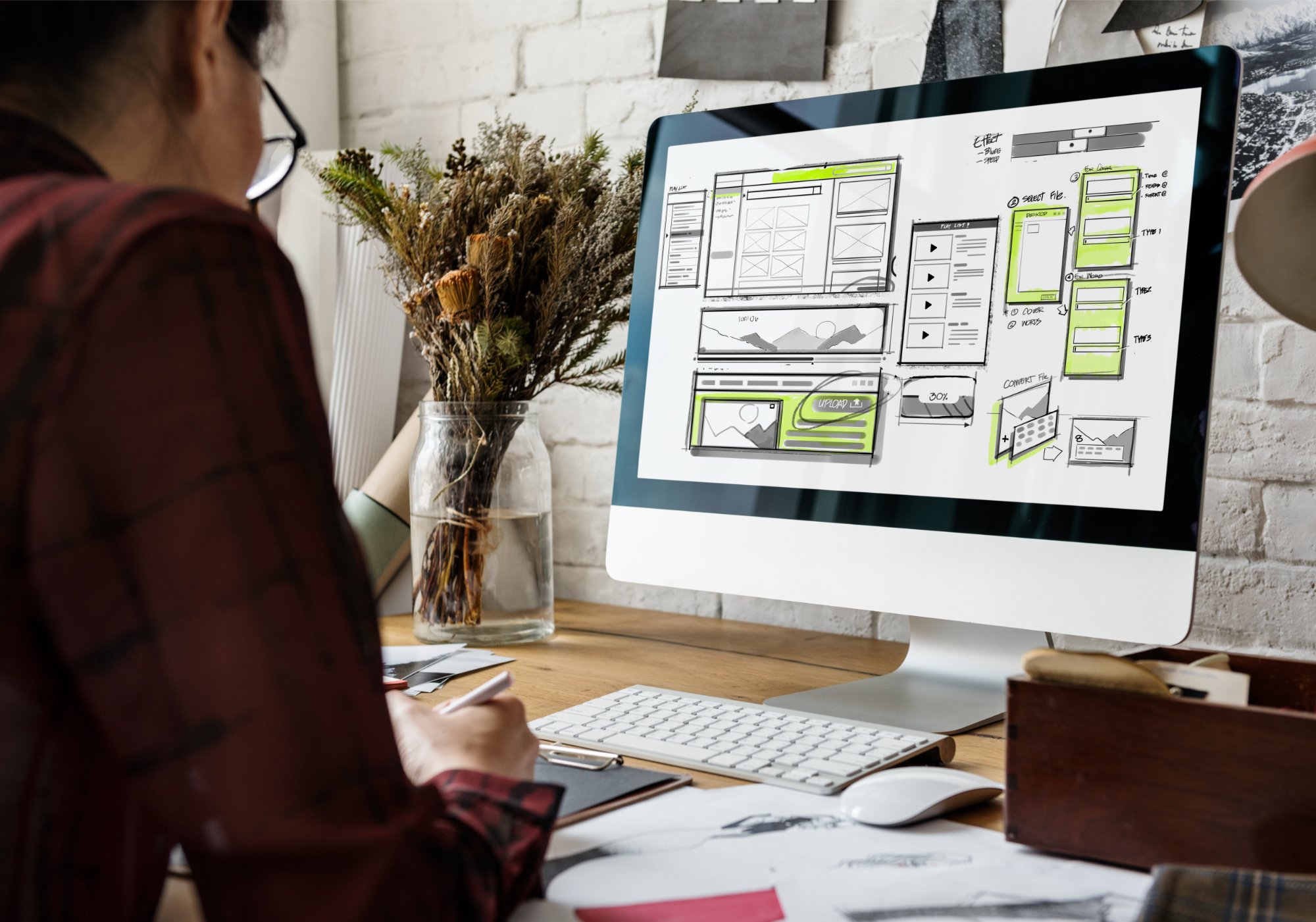
Readability plays a central role. Airy pages, explicit headings, hierarchised information blocks and a stable layout reduce mental effort. The less a guest has to work to understand, the more comfortable they feel booking. This ease is often interpreted as an indicator of service level: if everything is clear online, everything will be clear on site.
To explore further the overall logic of a site that serves the business (and not just to exist), you can consult this guide on creating a website to grow your business.
The Rooms page: turning a list into a desirable experience
Many hotels describe their rooms like an inventory: area, bedding, Wi‑Fi, television. That’s useful, but not enough. A well‑designed site turns these elements into concrete benefits: restorative sleep, quiet, light, privacy, easy circulation, practical storage, pleasant bathroom, controlled temperature. In short, you don’t sell a walk‑in shower; you sell a genuine moment of recovery after a day on the road or in meetings.
The ideal structure helps the user imagine themselves there effortlessly:
– A short hook that summarises the ambience (cosy, elegant, family‑friendly, design, nature…).
– 5 to 7 key benefits (not 20 identical icons).
– A more detailed description for those who want to check.
– A section for who? (couple, business, family, long stay) to guide and reduce hesitation.
– Photos that are genuinely representative, with consistent framing and light.

Hotel Web Design is a Google partner with Google Hotels :
your availabilities and prices are continuously sent to Google, which displays free booking links to your booking page.
These links can represent around 10% to 15% additional commission-free bookings. Read the article on
Google's free booking links
.
This storytelling increases perceived value: the room becomes a clear promise, not an interchangeable product.
Photos and media: the main lever for perceived upmarket positioning
In accommodation, images are everything. Dark photos, taken with an extreme wide‑angle, or inconsistent from one room to another create doubt: what are they hiding from me? Conversely, a controlled photo series (natural light, consistent angles, details, views, textures) makes the place tangible. The guest no longer compares only prices; they compare atmospheres.
A well-designed website orchestrates the media:
– Overview photos to understand the space.
– Details for the sense of quality (linen, materials, finishes, tray, sockets, storage).
– Lifestyle photos (desk with light, reading nook, balcony at sunset) to aid imagination.
– A short video or subtle micro-animations if they aid understanding (not if they slow things down).
This visual strategy reduces uncertainty, and uncertainty is the enemy of price. The more you reassure, the more the price seems justified.
Information architecture: make your rooms easy to choose
A guest does not want to study a brochure: they want to find the right room quickly. If your site forces them to open ten tabs, endlessly scroll or guess the differences between categories, you lose perceived value. Not because your rooms are worse, but because your offer seems confused.
A good architecture offers:
– A simple comparison chart (capacity, bed, view, distinctive amenities).
– Key differences highlighted (quiet, view, terrace, bathtub, workspace).
– A clear path to booking (visible CTAs, non-aggressive, always contextualised).
– Consistent language (avoid Deluxe, Superior, Privilege if the difference isn’t immediately understandable).
This clarity is not just ergonomic: it positions your property as organised and transparent, therefore more upscale in the guest’s mind.
UX and direct booking: when simplicity increases trust
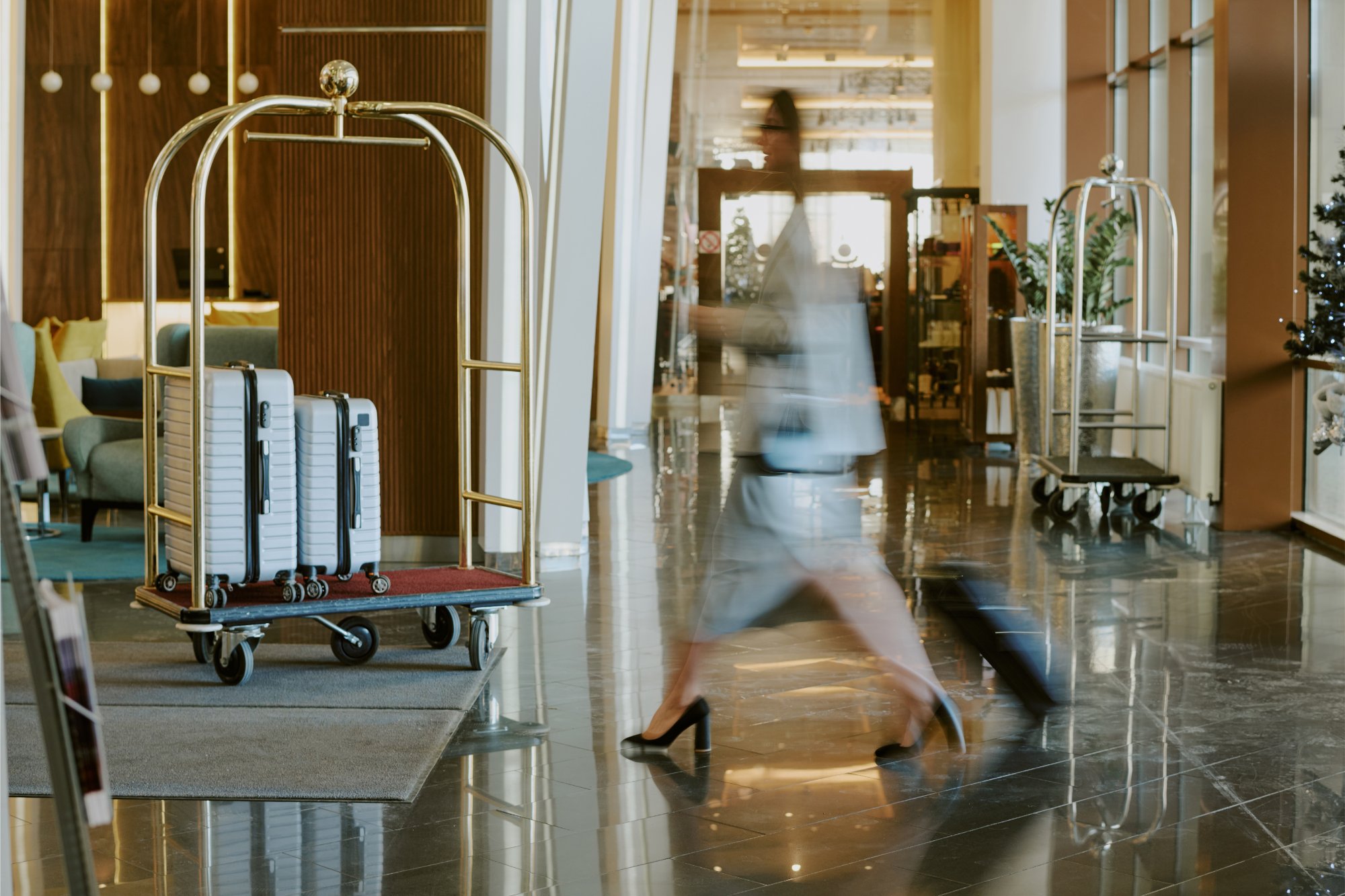
A well-designed site removes micro-frictions: loading times, confusing menus, overly long forms, poorly visible buttons, content that shifts. These details reduce trust, and trust is directly linked to price acceptance. The smoother the experience, the more the guest thinks: this is serious, I can book here.
The booking engine should be treated as a natural extension of the site: same visual codes, same words, same signposts. If the user feels they are leaving your world for a cold or complicated external tool, perceived value drops.
To delve into this logic from a conversion perspective, the article Why direct booking starts with the user experience details how ergonomics influence commercial performance.
Proofs of quality: reviews, labels, guarantees and reassurance signals
At a high price, the guest is not just looking for a nice room: they are looking for a decision without regret. Your site must therefore provide evidence, ideally at the right moment (when the user hesitates). Reassurance signals increase perceived value because they reduce perceived risk.
Examples of effective evidence:
– Selected and contextualised guest reviews (cleanliness, bedding, quiet, reception).
– Relevant labels (sustainability, accessibility, tourist quality) without overload.
– Clear policies (cancellation, check-in/out times, security deposit) stated simply.
– Anti-doubt FAQ (parking, late arrival, pets, air conditioning, cot).
What matters: readability. A wall of widgets and badges can have the opposite effect: too many arguments = too much doubt.
Useful storytelling: make people feel what makes your rooms unique
Storytelling is not a grand lyrical tale; it is the art of linking concrete details to a promise. Why are your rooms more restful? Why is the view special? Why is your bedding remarkable? What is done to ensure the stay goes smoothly?
In hospitality, the small things are often the most profitable… if they are noticed. A quality blackout curtain, careful soundproofing, a pleasant shower, a proper desk, accessible sockets, a well-thought-out kettle, an early-starting breakfast: every detail can justify a price, provided it is presented as a benefit.
On the overall mechanics of perceived value from a marketing perspective, you can read this article on improving perceived value.
Neuromarketing and perception: why the brain rounds up quality
Without resorting to manipulation, understanding certain mechanisms helps design a more persuasive site. The brain judges quality using shortcuts: visual coherence, simplicity, familiarity, reduced effort, premium cues (carefully styled photos, elegant typography, spacing, precise wording) and social proof. A messy site creates an impression of uncertainty that mentally devalues the room.
Conversely, when the presentation is controlled, the brain anticipates a more satisfying experience. This anticipation increases perceived value even before purchase, making the price seem more acceptable.

Hotel Web Design is the 100% web agency dedicated to the hotel industry, supporting you in all aspects of digital communication: booking websites, natural search engine optimisation specialising in the hotel industry, Google Ads and Google Hotel Ads, social networking campaigns, graphic charters and logos.
Make an appointment today for free advice on optimal digital management.
If you want to explore the cognition and decision angle further, this article on neuromarketing applied to perceived value offers interesting leads.
Pricing, packages and comparison: present the price so it appears fair
A well thought-out site does not hide the price, but frames it. Framing does not mean forcing: it means helping the customer understand what is included, what differentiates your categories, and why the price is logical.
Some effective approaches:
– Highlight what is included (breakfast, parking, spa access, welcome products, late check-out depending on the offer).
– Offer 2 to 4 packages maximum, clear and usage-oriented (romantic, business, relaxation, family).
– Clarify differences between offers (flexible cancellation vs non-refundable) using simple words.
– Avoid permanent promotions: they destroy perceived value and train customers to wait for a drop.
Perceived value increases when the customer can tell themselves: I know what I’m buying, and it’s worth my money. For a summary of value levers on the offer and presentation side, this content on improving perceived value can complement your thinking.
Mobile-first: where perception (and not just conversion) is decided
The majority of visits are on mobile, and it’s often on mobile that the mental image of your hotel is formed. A site that is technically responsive can nonetheless be frustrating: text too small, photos poorly cropped, buttons too close together, intrusive pop-ups, interminable sections.
A truly mobile-first site is recognisable by:
– Short, scannable blocks.
– Thumb-friendly, contextual CTAs.
– Galleries that are easy to browse (not stuttering carousels).
– Controlled load times (optimised images, limited scripts).
On mobile, every second of friction worsens overall perception. And when perception drops, price sensitivity rises. In other words: a fast, clear site often helps you maintain your rates.
Retention and lifetime value: a good site sells more than a single night
Increasing perceived value isn’t just about the first booking. A well-designed site builds a relationship: it makes people want to return, gift a stay, or recommend to someone close. Dedicated pages for the benefits of direct booking, a section of useful content (local activities, practical tips), easy newsletter sign-up, codes or gestures reserved for direct customers… all elements that strengthen attachment and reduce dependence on platforms.
In this logic, Website and loyalty: the weapon against Booking explains how the site can support a more profitable strategy beyond acquisition.
Customer data: better knowledge for better personalisation (and better monetisation)
Perceived value increases when the experience is smoother and more personal: tailored messages, relevant offers, customer recognition, little touches. But to personalise you need to collect and structure the data (while respecting GDPR), rather than leave it trapped with intermediaries.
A well-designed site facilitates this collection transparently: thoughtful forms, stay preferences, clear opt-in, journeys that encourage direct booking. Then this data allows better segmentation (business vs leisure, families, couples), sending useful offers (outside already busy periods), and increasing return rates.
To understand the practical issues around data, consult How to retrieve the customer data that Booking keeps for itself.
Why off-the-shelf solutions often drag perception down
Many platforms offer turnkey sites. It’s quick, but rarely aligned with your actual positioning. The problem isn’t only visual: it’s homogenisation. If your site looks like dozens of other hotels, your room becomes more comparable, and therefore easier to haggle over in the customer’s mind.
A standard site often imposes:
– Rigid page structures.
– Limitations on highlighting differentiating features.
– Mediocre mobile rendering.
– Performance that can sometimes be improved (scripts, widgets, sluggishness).
Result: your establishment is reduced to a product sheet. And a product sheet is subject to price wars. For an insight into these limits, read Why platforms' turnkey solutions are not enough.
Your quote in 5 minutes
Aligning site, operations and promise: the coherence that justifies the price
Perceived value is not a slogan: it is an agreement between what you show, what you promise and what you deliver. Your site must reflect your real strengths (quiet, bedding, location, welcome, cleanliness, breakfast, wellness area) and avoid vague promises. The more precise your communication, the more credible it is.
This logic also applies in decision sciences and marketing: perception is built with coherent cues. On this subject, this article on increasing perceived value for the customer reminds us of the importance of perception mechanisms in the final judgement.
When to call on specialised expertise (and what it changes)
A good hotel website is not a pretty site. It is a tool that combines: photography and content, UX, performance, local SEO, integration of the booking engine, reassurance, conversion strategy, and brand coherence. The aim is not only to increase the number of bookings, but to support the average price by making the offer more desirable and more understandable.
A team specialised in hospitality will generally ask better questions: which rooms are most profitable, which segments you target, which periods you want to fill, which arguments truly differentiate you, which objections recur in reviews. This business understanding is then reflected in the site structure and the way you present your rooms.
To see what this entails, How a specialised agency better understands your business challenges can help you assess the value of support.
Actionable checklist: 12 improvements that quickly increase perceived value
1) Replace inventory descriptions with concrete benefits.
2) Harmonise the photos (lighting, framing, natural retouching).
3) Highlight no more than 5 to 7 differentiating points per room.
4) Add premium details in photos (textures, finishes, views).
5) Create a simple comparison between categories.
6) Make the terms (cancellation, times) ultra-readable.
7) Optimise speed (compressed images, limited scripts).
8) Ensure consistency site ↔ booking engine.
9) Add proof in the right place (reviews on bedding/cleanliness/quietness).
10) Clarify the benefits of booking direct without aggressiveness.
11) Work mobile-first (CTAs, readability, galleries).
12) Reduce distractions (pop-ups, unnecessary carousels, redundant content).
Conclusion: your site is a psychological price before it is a sales channel
A well-designed site doesn’t change your rooms physically, but it changes how they are assessed. It turns a comparable offer into a credible, desirable and reassuring experience. That is how it increases willingness to pay: by reducing uncertainty, improving projection, giving meaning to the price and making quality visible.
If you want to quickly identify the priority improvements for your property and estimate the budget, you can start here: Your quote in 5 minutes.










Hotel Web Design is a Google partner with the Google Hotelsincluding our customers benefit on a daily basisGoogle search: information about your accommodation, availability and prices is sent continuously to the search engine, which displays free booking links from the Google search directly to your booking page. These free links represent around 15% of additional commission-free bookings for our customers in 2022! Read our article on free booking links from Google
Booking / reservation website
-
Booking services for hotels and holiday rentals
- Turnkey site with administration interface training on delivery
- Adapted logo and graphic charter. Possibility of using your existing elements
- Hospitality SEO
- Integration of reservations module
- or integration of an external booking engine (Reservit, Availpro, Mister booking, Roomcloud, etc)
- Integration of specific HTML elements (review portals, customer reviews, weather, press, pop-ups, direct chat, etc.)
- Secure SSL / HTTPS
- Multilingual
- Website user interface
- Hosting and domain name
- Fast delivery

Hotel Web Design is the web agency 100% dedicated to the hotel industryWe can help you with all aspects of digital communication for your accommodation: booking websites, natural referencing specialising in the hotel industry, Google Ads referencing and Google Hotel Ads, social networking campaigns, graphic charters and logos for hotels.
Make an appointment today for free advice on how to optimise the digital management of your accommodation.