
direct hotel booking
Website and loyalty: the weapon against Booking
The real battle is not won on an OTA page, but in the relationship you build with your guests before, during and after their stay. Platforms like Booking excel at capturing demand and converting quickly. In return, they take a commission, control part of the relationship, and make repeat business harder for the hotelier to manage. Your site, however, can become your loyalty lever — and thus your best anti-Booking weapon — provided it is conceived as a sales channel and a relationship channel, not just a showcase.
Why loyalty is the best antidote to dependence on OTAs
Every booking coming from a platform may seem easy to get, but it is expensive in margin and control. Dependence sets in when the OTA flow becomes the default reflex, including for returning guests. Yet a returning guest is the most profitable profile: lower marketing costs, more trust, greater likelihood of buying an upgrade, breakfast, a wellness service or a late check-out.
The problem is therefore not the existence of Booking, but that the hotel does not have enough reasons (and tools) to bring the guest back to it, that is to say to its own ecosystem. Your website is the natural place to create those reasons: exclusive benefits, brand experience, reassurance, personalisation, and above all a frictionless journey.

Understanding the asymmetry: Booking converts, your site must build loyalty
OTAs invest heavily in acquisition (SEO, SEA, retargeting, app, e‑mailing, loyalty programmes). They master optimisation of conversion rates, social proof and comparison. They offer a simple promise: book in a few clicks, cancel easily.
But this strength is also their blind spot for you: the relationship belongs first to the platform. Loyalty is often built… to the benefit of the OTA, through its programmes and incentives to book again within its universe. To deepen the economic logic of this power dynamic, you can consult the external analysis Hoteliers and online agencies: the battle for ….
Turn your site into a reassurance machine (not just a brochure)
A site that builds loyalty is not necessarily a beautiful site. It is a site that reassures and makes people want to return, with concrete proof and navigation designed for real use (mobile first, quick decision, implicit comparison). The fundamentals:
1) A clear promise : why book with you rather than elsewhere? This could be a genuine price advantage (breakfast included, flexibility, upgrade subject to availability), an experience (spa access, parking, personalised welcome), or a commercial policy (more flexible terms).
2) A comprehensible Offers page : not ten confusing promotions, but a few structured offers, with clear benefits, simple conditions, and well-managed dates.
3) Proofs : customer reviews, labels, authentic photos, precise information (room size, bedding, hours, services). This level of detail reduces the anxiety that drives customers back to Booking to check.

Hotel Web Design is a Google partner with Google Hotels :
your availabilities and prices are continuously sent to Google, which displays free booking links to your booking page.
These links can represent around 10% to 15% additional commission-free bookings. Read the article on
Google's free booking links
.
4) Smooth conversion : a fast, transparent booking engine with no surprises, optimised for mobile. The best argument in the world falls flat if the booking step is slow or confusing.
Loyalty begins before arrival: capturing intent and preference
You do not only earn loyalty after the stay. You earn it when you turn a visitor into a future regular, even if they do not book straight away. Your site can play that role if you structure it to capture:
Preference (I want this hotel) through a clear identity, useful content (access, parking, neighbourhood, tips) and coherent offers.
Intention (I want to stay on these dates) through visible CTAs, a booking engine accessible from every page, and landing pages by need (romantic weekend, business trip, family, spa, event).
Trust through a readable cancellation policy, transparent rates, and immediate answers to frequently asked questions.
Reduce friction: anti-Booking is above all anti-effort
If the user has to work on your site, they will go compare elsewhere. Loyalty depends on a simple, coherent experience:
Mobile-first — more than half of visits are on mobile. Menus, buttons, forms and pages must be designed for the thumb, not the mouse.
Speed — technical performance (optimised images, limited scripts) and a responsive engine.
Clarity : rates, terms, taxes, hours, services — everything must be stated explicitly, without jargon.
Continuity : the transition from the site to the booking engine must remain visually and functionally coherent. Interface breaks undermine trust.
The crux of the matter: collecting and using customer data
Loyalty doesn't exist without customer knowledge. Yet, on OTAs, data is shared in a limited way, sometimes late, and rarely usable as you would like (depending on rules, settings and cases). The aim of your anti-Booking strategy is not to punish OTA customers, but to turn a one-off guest into a recognised customer, with preferences and a history.
Concretely, this involves:
Smart forms (pillow preferences, arrival time, parking needs, intolerances).
Pre-stay journeys (useful emails, upsell, access guide, early check-in).
A clean CRM base (consent, segmentation, simple automations).
To go further on the subject, see How to retrieve the customer data that Booking keeps for itself.
Create direct benefits that encourage return visits
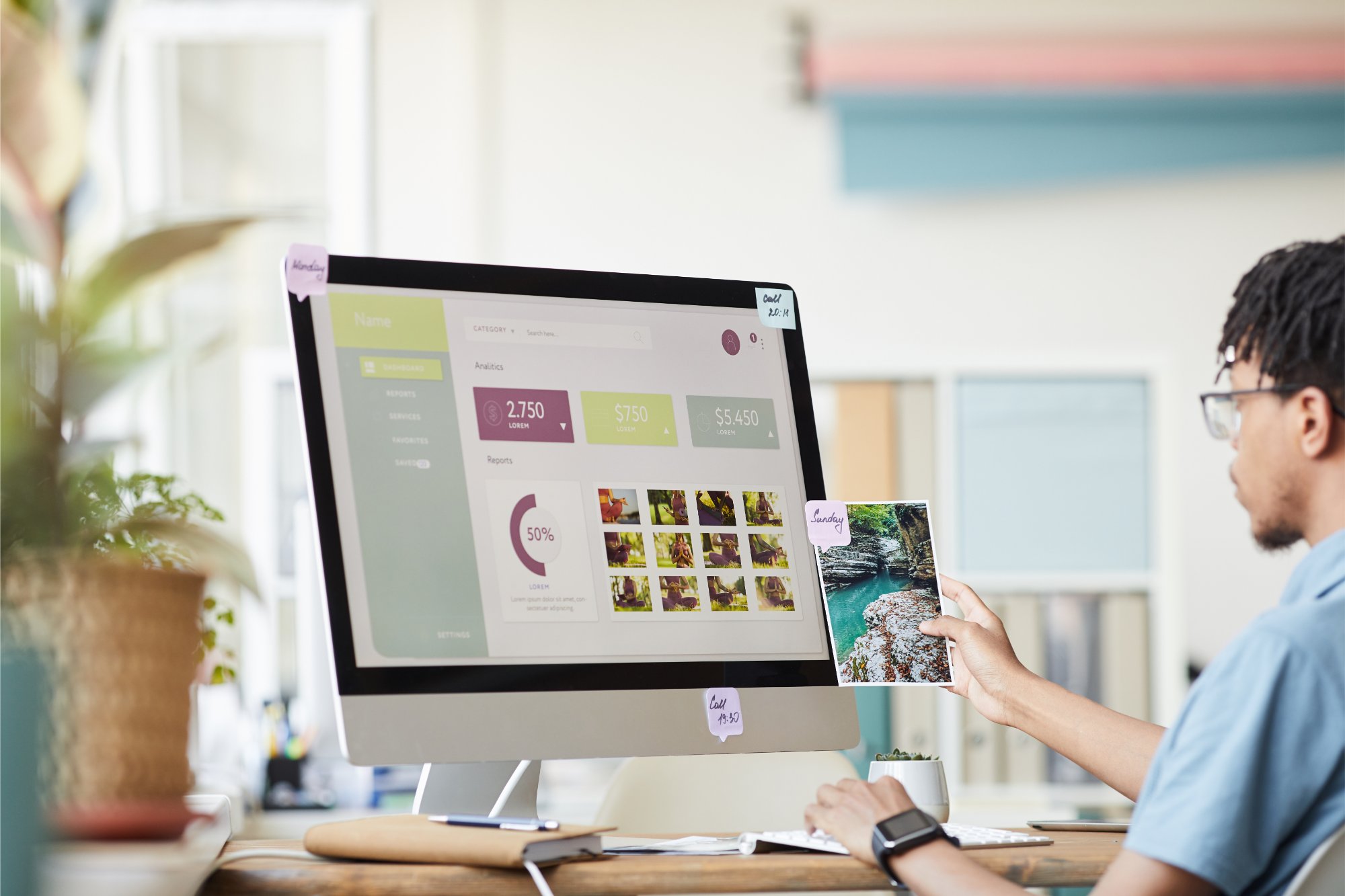
A loyalty programme doesn’t need to be complex. It must be credible, easy to understand and genuinely rewarding. A common pitfall is promising better prices without being able to prove it, or offering benefits too small to change behaviour.
Some effective mechanisms:
Immediate benefits : a concrete benefit from the first booking (breakfast, welcome drink, upgrade subject to conditions, late check-out).
Stackable benefits : a simple logic — after X stays, you get Y.
Contextual benefits : offers dedicated to off-peak periods, long stays, midweek returns.
Relational benefits : better room according to preferences, personalised welcome, prioritisation of requests.
The main point: make the benefit accessible only via your ecosystem (website + direct communication), without complicating the journey.
Useful content (not SEO content just for show)
The content that builds loyalty is not a stack of generic articles. It is content that helps the guest imagine themselves and reduces uncertainty. Examples:
Experience pages : spa, restaurant, bar, rooftop, coworking, gym, business services.
Neighbourhood pages : how to get here, travel time, car parks, transport, points of interest at real distance (on foot/by car).
Life moments pages : weekend for couples, family stay, stopover, event, seminar.
Living FAQ : children policy, pets, accessibility, opening hours, payment, security deposit, business invoicing.
This content should serve conversion and reassurance. A guest who finds their answers with you has fewer reasons to go and check on Booking.
The booking page: your digital front desk
The booking engine is your online reception. It should be designed as a sales tool, not as a technical module dropped in by obligation. To maximise retention and conversion:
Show the value : difference in benefits between direct and OTAs, terms, flexibility.
Simplify : fewer steps, fewer fields, more clarity.
Offer options : breakfast, parking, spa, early check-in, late check-out, romantic welcome.
Reassure : secure payment, support, immediate confirmation.
If you want a structured approach to turn your site into a genuine sales channel, here is a relevant internal resource: How a website can become your best sales channel.
The classic mistake: believing in platforms' turnkey solutions
Some tools offered by platforms or intermediaries promise to do the job: mini-sites, standard widgets, prefab pages, basic automations. They can be handy, but rarely build a lasting advantage. Why? Because these solutions are designed to be deployed quickly, at scale, and to meet a generic need — not your positioning, your clientele, your operational constraints or your margin strategy.

Hotel Web Design is the 100% web agency dedicated to the hotel industry, supporting you in all aspects of digital communication: booking websites, natural search engine optimisation specialising in the hotel industry, Google Ads and Google Hotel Ads, social networking campaigns, graphic charters and logos.
Make an appointment today for free advice on optimal digital management.
Loyalty is a bespoke strategy: it depends on your customer types (leisure, corporate, groups), your seasonality, your location, your ability to upsell, and your on-site experience. To understand the limits of these standardised approaches, see Why platforms' turnkey solutions are not enough.
The winning trio: website + e‑mail + CRM (the real retention loop)
Your website is the foundation. But loyalty comes from the complete loop:
1) Capture : at the time of booking (or pre‑stay), you obtain the right information with consent.
2) Activation : useful messages (stay preparation), option offers, assistance.
3) Experience : the website’s promise is fulfilled on site (essential consistency).
4) Re‑engagement : after the stay, you thank them, ask for a review, and offer a reason to return (return offer, loyalty benefit, promo code, event).
5) Personalisation : on the next visit to the site, the guest recognises your attention (tailored messages, coherent offers, reminder of benefits).
Booking and Airbnb: partners, competitors… and above all channels to be framed
An anti-Booking strategy is not a strategy without Booking. The platforms remain useful to fill rooms, capture international demand, smooth a low season, or launch a property. The challenge is to define their role: acquisition and visibility, yes; dependence and retention captured by a third party, no.
Everything hinges on the balance of channels, price coherence, and the ability to turn the first stay into a direct relationship. To delve deeper into this stance, see Booking and Airbnb: partners or competitors of your hotel.

Measure what matters: the loyalty KPIs via the site
You cannot steer what you do not measure. Useful indicators are not only traffic:
Direct conversion rate : by device, by source, by landing page.
Share of repeat guests : over 6/12/18 months.
Customer acquisition cost by channel : including commissions and marketing costs.
Customer lifetime value (LTV) : cumulative margin over multiple stays.
Opt-in rate : email/SMS, consents, data completeness.
Return campaign performance : open rate, click, conversion.
The objective: to prove that the website + loyalty strategy is not a cost, but a transfer of value from OTA commission to your margin and customer relationship.
A concrete 60-day action plan
Weeks 1-2: conversion & reassurance fundamentals
Optimise speed, check the mobile journey, clarify terms (cancellation, payment, taxes), simplify key pages (rooms, offers, contact, access). Add visible proof (reviews, authentic photos, practical information).
Weeks 3-4: direct benefits & data collection
Define 2 to 4 simple direct benefits, highlight them on the site and in the engine. Add useful preference fields and a clear consent logic. Prepare a pre-stay email and a post-stay email.
Weeks 5-6: useful content & landing pages
Create pages by intent (business, couples, family, events), and a structured FAQ. Develop neighbourhood pages that address real objections (parking, access, safety, hours, transport).
Weeks 7-8: feedback loop
Launch a return campaign (return benefit, quiet-season dates, birthday offer, member advantage). Measure and adjust. Loyalty is built through iterations.
Resources and method: take inspiration without copying
There are structured approaches to reducing dependence on OTAs and regaining margin. For an external resource, you can consult Anti-Booking Guide: increase your direct bookings, useful for thinking about the whole system (acquisition, conversion, retention) and identifying high-impact actions.
Why getting support changes the speed (and profitability)
Most hotels do not have a problem of willpower, but a problem of bandwidth and expertise: prioritising, defining a value proposition, correctly configuring tools, aligning marketing and operations, then measuring what truly works.
A specialised approach often helps avoid two pitfalls: investing in cosmetic redesigns that do not change sales, or stacking tools that do not communicate with each other. To understand what dedicated expertise brings, see How a hotel-specialist agency better understands your business challenges.
Your quote in 5 minutes
Conclusion: your website is your most powerful loyalty programme
OTAs are formidable at capturing a booking. But they cannot embody your hospitality, nor tell your difference with the same authenticity as you. The strongest anti-Booking strategy is not a price war: it is building a direct, measurable, durable relationship, where your site becomes the natural entry point to book, return, and recommend.
If you want to quickly frame an improvement plan (conversion, data collection, direct benefits, content, measurement), you can start with Your quote in 5 minutes.













Hotel Web Design is a Google partner with the Google Hotelsincluding our customers benefit on a daily basisGoogle search: information about your accommodation, availability and prices is sent continuously to the search engine, which displays free booking links from the Google search directly to your booking page. These free links represent around 15% of additional commission-free bookings for our customers in 2022! Read our article on free booking links from Google
Booking / reservation website
-
Booking services for hotels and holiday rentals
- Turnkey site with administration interface training on delivery
- Adapted logo and graphic charter. Possibility of using your existing elements
- Hospitality SEO
- Integration of reservations module
- or integration of an external booking engine (Reservit, Availpro, Mister booking, Roomcloud, etc)
- Integration of specific HTML elements (review portals, customer reviews, weather, press, pop-ups, direct chat, etc.)
- Secure SSL / HTTPS
- Multilingual
- Website user interface
- Hosting and domain name
- Fast delivery

Hotel Web Design is the web agency 100% dedicated to the hotel industryWe can help you with all aspects of digital communication for your accommodation: booking websites, natural referencing specialising in the hotel industry, Google Ads referencing and Google Hotel Ads, social networking campaigns, graphic charters and logos for hotels.
Make an appointment today for free advice on how to optimise the digital management of your accommodation.